

- by Ahmed Shareek
Famous Sapphires in History — The Stones That Shaped the World’s Love of Blue
- by Ahmed Shareek
New to buying sapphires? Start with our Ultimate Sapphire Buying Guide — the complete resource for color, origin, treatment, and pricing.
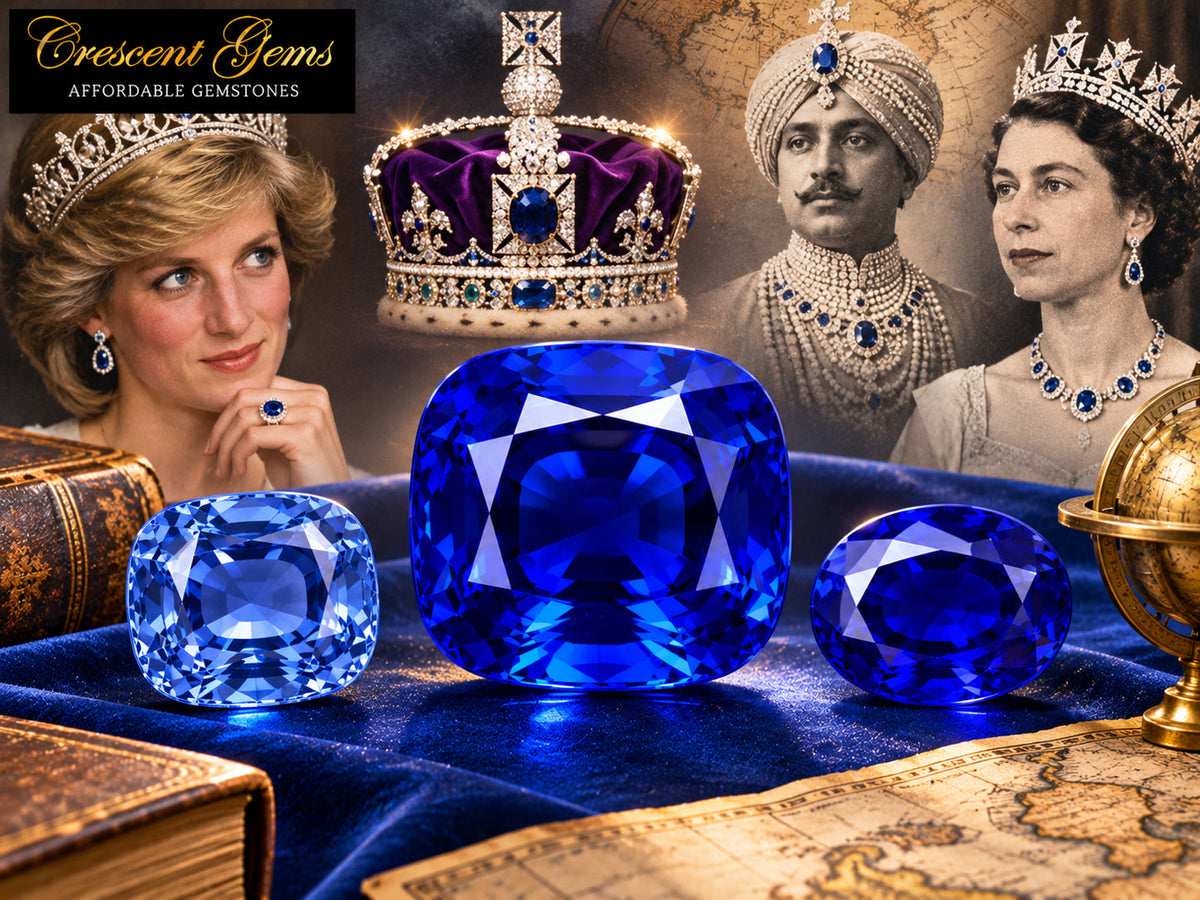
Sapphires have been prized by rulers, collected by museums, and worn by royalty for centuries. The famous sapphires of history are not just gemstones — they are artifacts of power, devotion, conquest, and legacy. Each one carries a story that connects the stone to the civilizations that valued it, the hands that held it, and the events that shaped its journey from the earth to a crown, a ring, or a museum case.
These are sapphires whose stories are written down — in museum registers, a royal inventory and auction catalogues — and knowing how those records were made is useful when you choose a natural sapphire today.
The Star of India is a cabochon-cut blue star sapphire of 563.35 carats, roughly the size of a golf ball. The American Museum of Natural History, which holds it, describes it as the largest gem-quality star sapphire known. Its six-rayed star is produced by fine inclusions of the mineral rutile.
The museum records the stone as mined in Sri Lanka; apart from that origin, its history before it entered the collection is undocumented. George Frederick Kunz, the Tiffany gem expert who also gave his name to kunzite, assembled the gem collection that financier J.P. Morgan donated to the American Museum of Natural History in New York, and the Star of India was part of it. Writing in 1913, Kunz credited the stone with an indefinite historic record of some three centuries.
On the night of 29 October 1964, the Star of India was stolen from the museum along with other major gems, including the DeLong Star Ruby. The thieves, among them Jack Murphy ("Murph the Surf"), had unlocked a bathroom window during opening hours and climbed in that night. They were arrested within days, but the gems had already been passed on. The Star of India was recovered in January 1965 from a bus station locker in Miami, and it is on display at the museum today.
The Star of India demonstrates several things about Ceylon sapphire: the size of crystal that Sri Lankan deposits have produced, the asterism created by oriented rutile silk (see Star Sapphire Guide), and the long connection between Sri Lanka and the sapphire trade.
In 1981, Lady Diana Spencer chose her engagement ring from Garrard, the London jeweller. Garrard describes it as a 12-carat oval Ceylon sapphire surrounded by 14 solitaire diamonds and set in 18-carat white gold. The ring was not a custom royal commission: Garrard itself describes it as a ring that anyone could buy at the time.
The choice drew attention for two reasons: the ring was a design already in Garrard's range rather than one made for the occasion, and its centre stone was a coloured gem rather than a diamond. The engagement photographs of 1981 made the sapphire-and-diamond cluster widely recognised, and Garrard's own 1735 collection takes its setting from this ring.
In 2010, Prince William proposed to Catherine Middleton, now Catherine, Princess of Wales, with the same ring his father had given to Diana, and the ring returned to the news around the world.
Garrard describes the colour of the stone as a deep, intense blue. At 12 carats, it is a substantial stone by any standard. We know of no published laboratory report on it, so this page states nothing about its treatment. For buyers inspired by this ring, see Blue Sapphire Engagement Ring Guide and Ceylon Sapphire Engagement Rings.
The Smithsonian Institution describes the Logan Sapphire as one of the world's largest faceted blue sapphires. Its catalogue lists the stone at 423.00 carats, a mixed cushion cut, blue with very slight violet overtones, and the heaviest mounted gem in the National Gem Collection.
It was cut from a crystal mined in Sri Lanka (Ceylon) and was given to the Smithsonian Institution's National Museum of Natural History in Washington, D.C. by Mrs. John A. Logan in 1960. Its silver and gold brooch setting frames it with 20 round brilliant diamonds totalling about 16 carats. The museum records that it earlier belonged to Sir Victor Sassoon.
The Logan Sapphire shows the size of gem crystal that Sri Lankan deposits have yielded. For the geology behind Ceylon sapphire, see Ceylon Sapphire Complete Guide and Pit Mining in Sri Lanka.
Another star sapphire from Sri Lanka, the Star of Lanka weighs 193 carats. The Royal Ontario Museum in Toronto, which holds it, catalogues it as a high cabochon cut from Sri Lanka (Ceylon), measuring about 30 by 27 by 23 millimetres, and notes that it is named for its country of origin.
The museum has used it in its gem gallery to show asterism, the star effect produced by fine, hair-like inclusions of another mineral within the stone. Like the Star of India in New York and the Logan Sapphire in Washington, it is a large Sri Lankan sapphire on record in a North American museum. See How to Tell If a Star Sapphire Is Natural.
The Stuart Sapphire is the large oval sapphire set at the back of the band of the Imperial State Crown. The Royal Collection Trust gives its weight as approximately 104 carats and notes that it was drilled at some point in its history for use as a pendant.
According to the Royal Collection Trust, it is traditionally thought to have been smuggled out of England by James II when he fled in December 1688. It passed to his son James Francis Edward, 'the Old Pretender', and eventually to Henry, Cardinal York. After the Cardinal's death, a dealer acting for George IV bought a large sapphire said to have belonged to the Stuart crown and brought it back to Britain. By the time of Queen Victoria's coronation it was set at the front of the band of her State Crown, and in 1909 it was moved to the back to make room for the newly acquired Cullinan II diamond.
It is easily confused with St Edward's Sapphire, the octagonal rose-cut stone at the centre of the cross on top of the same crown, which carries the legend of Edward the Confessor. The Stuart Sapphire's own record, traceable from 1688 to the present crown, shows a stone drilled, reset and worn across more than three centuries.
According to GIA, sapphires were discovered in Kashmir around 1881, when a landslide high in the Himalayas exposed a large pocket of blue crystals. The Maharaja of Kashmir took control of the new locality, and from 1882 to 1887 thousands of large crystals were recovered there. GIA notes that production has been sporadic since then.
Kashmir sapphires still appear at auction, and the catalogue entry is where each stone's history is written down. In May 2015, Christie's Geneva sold a 35.09-carat Kashmir sapphire ring that it announced as a world auction record for a Kashmir sapphire; GIA reported that a 27.68-carat Kashmir sapphire sold at Sotheby's Hong Kong in October of the same year set a higher price per carat.
The Kashmir sapphire story is covered in full in our Kashmir Sapphire — Mining History, Availability, and How the Origin Is Documented.
The Blue Belle of Asia is a cushion modified mixed-cut sapphire of 392.52 carats. According to Christie's, it was uncovered in 1926 at Pelmadula, Ratnapura, in what was then Ceylon, was owned by the Colombo gem dealers Macan Markar, and was sold in 1937 to the British motor magnate Lord Nuffield.
On 11 November 2014, set as the centre of a necklace, it sold at Christie's Geneva for CHF 16,965,000 (US$17,295,796), which Christie's announced as a new world record for any sapphire sold at auction. Christie's cites an SSEF report of 2014 giving its origin as Ceylon with no indications of heating; as SSEF puts it, "Origin determination is an expert opinion." The necklace was offered again at Christie's New York in 2025.
Pelmadula lies in Sri Lanka's Ratnapura district, which remains a centre of the island's gem mining and gem trade. See The Ratnapura Gem Market.
A rectangular step-cut sapphire, the Rockefeller Sapphire was bought in 1934 by John D. Rockefeller Jr., through the New York jeweller Raymond Yard, from an Indian ruler reputed to have been the Nizam of Hyderabad. GIA notes that it was first set as a brooch and later as a ring with two cut-cornered triangular diamond side stones. Christie's New York sold it on 11 April 2001 for US$3,031,000, catalogued with a laboratory report giving its origin as Burma (Myanmar). Its provenance connects American industrial wealth with an Indian princely collection.
A 98.57-carat sapphire from Burma (Myanmar), the Bismarck Sapphire was given to the Smithsonian Institution in 1967 by Countess Mona von Bismarck. It is mounted in a platinum necklace designed by Cartier, set with 312 baguette and round brilliant diamonds and accented with eight square-cut sapphires. Cartier first set it horizontally in a necklace in 1927; in 1959 the Countess had the necklace remade with the sapphire set vertically. The Smithsonian describes its colour as the deep blue associated with sapphires from Burma.
Around 1796, Napoleon Bonaparte gave Joséphine de Beauharnais an engagement ring set with a sapphire and a diamond side by side in a "toi et moi" ("you and me") design — two stones facing each other, representing the union of two individuals. The Los Angeles Times reported that the ring sold at the Osenat auction house in Fontainebleau in March 2013 for 730,000 euros (about $948,000).
This ring is notable for two reasons. First, it is an early, well-documented example of the toi et moi format, which jewellers still make today. Second, it shows that a sapphire engagement ring is not a modern idea: this one dates from the end of the eighteenth century. See Trending Sapphire Colors for 2026.
Several themes emerge from the stories of these sapphires:
Sri Lanka recurs. The Star of India, the Logan Sapphire, the Star of Lanka and the Blue Belle of Asia are recorded as Sri Lankan by the institutions that hold or sold them, and Garrard describes the Diana ring's sapphire as Ceylon. The Rockefeller and Bismarck sapphires are recorded as Burmese, and the Royal Collection Trust gives no origin for the Stuart Sapphire. GIA names Sri Lanka, with Kashmir and Myanmar, as one of three historically important sources of sapphire. See Ceylon Sapphire Complete Guide.
Sapphires endure. The Stuart Sapphire's record runs from 1688 to the present crown, and Kunz credited the Star of India with some three centuries of history. Sapphire is Mohs 9, and GIA writes that it has "excellent toughness and no cleavage," which is why stones like these could be drilled, reset and worn across generations.
Records are documents. What makes these stones knowable is paperwork: museum catalogue entries, a royal collection record, and auction catalogues that cite laboratory reports. Christie's listing for the Blue Belle of Asia names its reports; its listing for the Rockefeller Sapphire names the owners and sales since 1934. The same habit serves the buyer of a one-carat stone: a laboratory report, the treatment status stated, and a dated invoice. See Sapphire Pricing Explained.
The stories matter. Every famous sapphire carries a provenance that adds meaning beyond the stone's physical qualities. Your sapphire will carry your story — where it came from, who chose it, what it represents. Understanding what sapphire has meant across history enriches what it means to you.
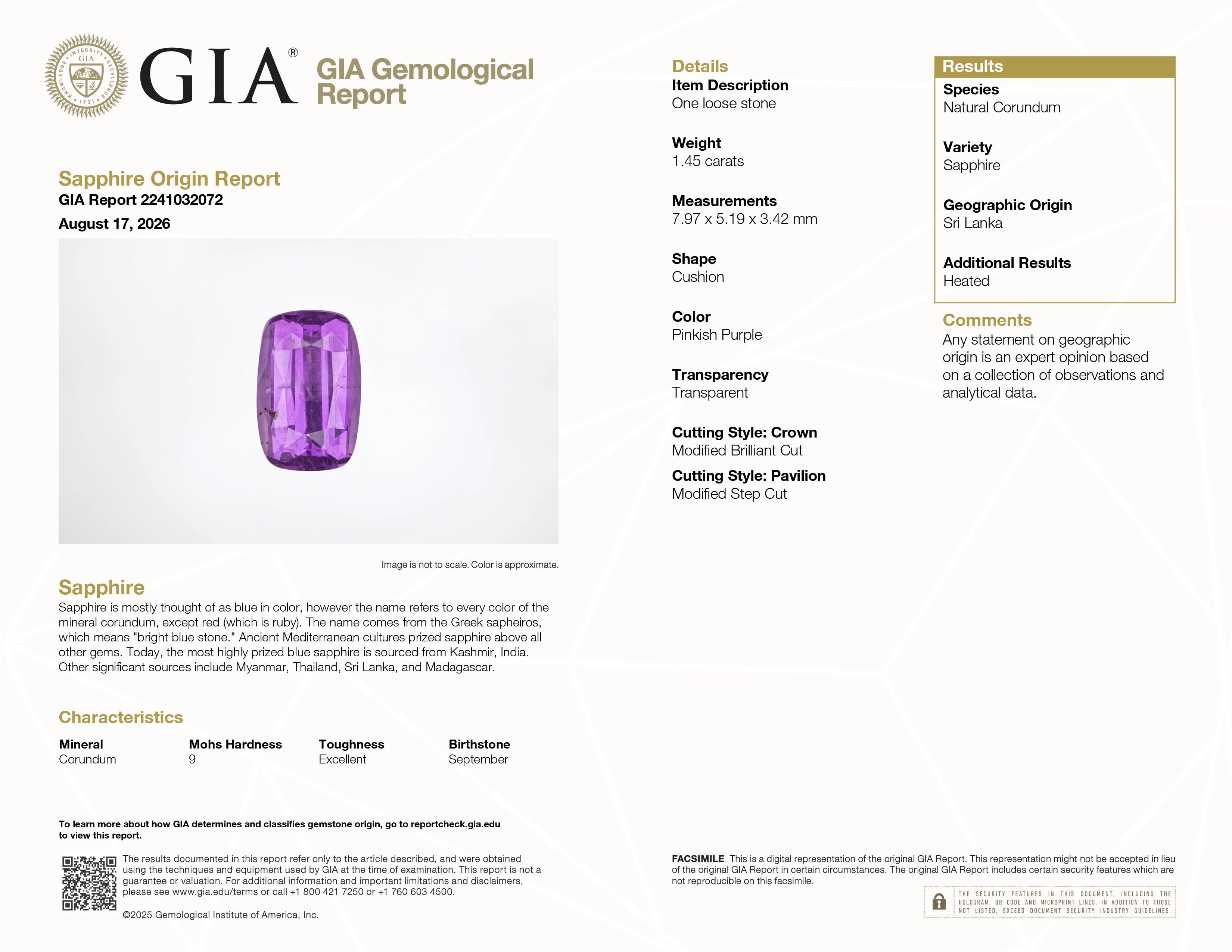
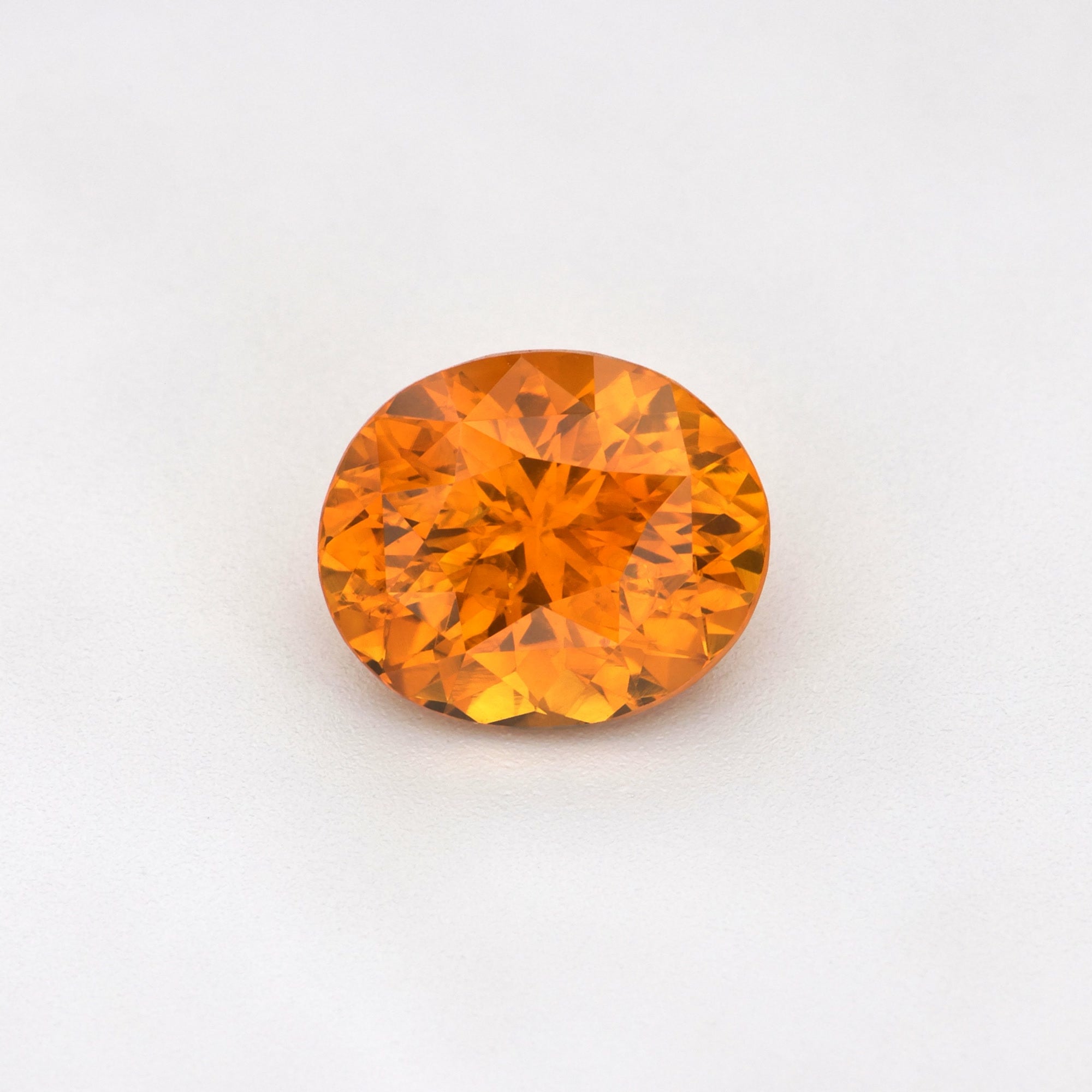
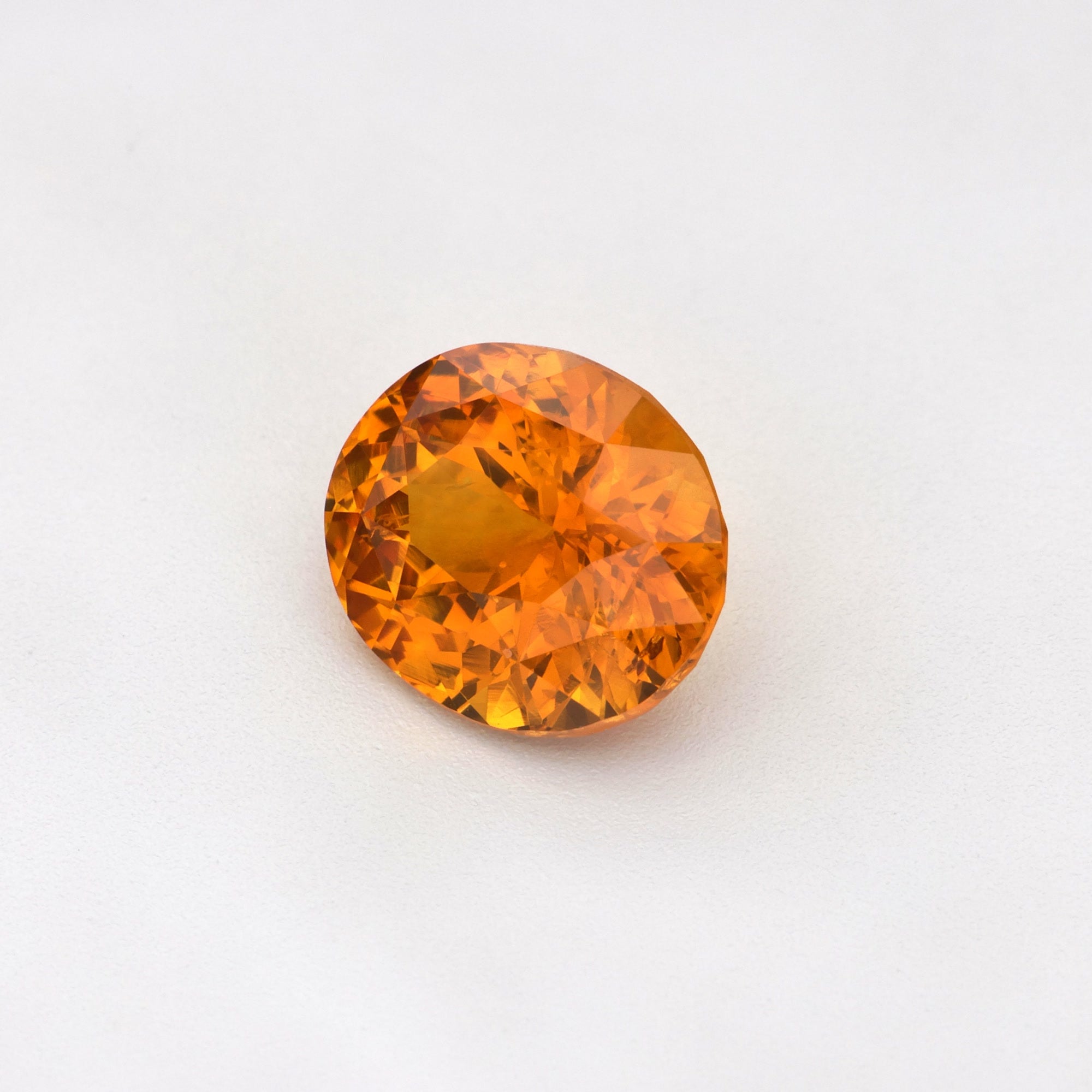
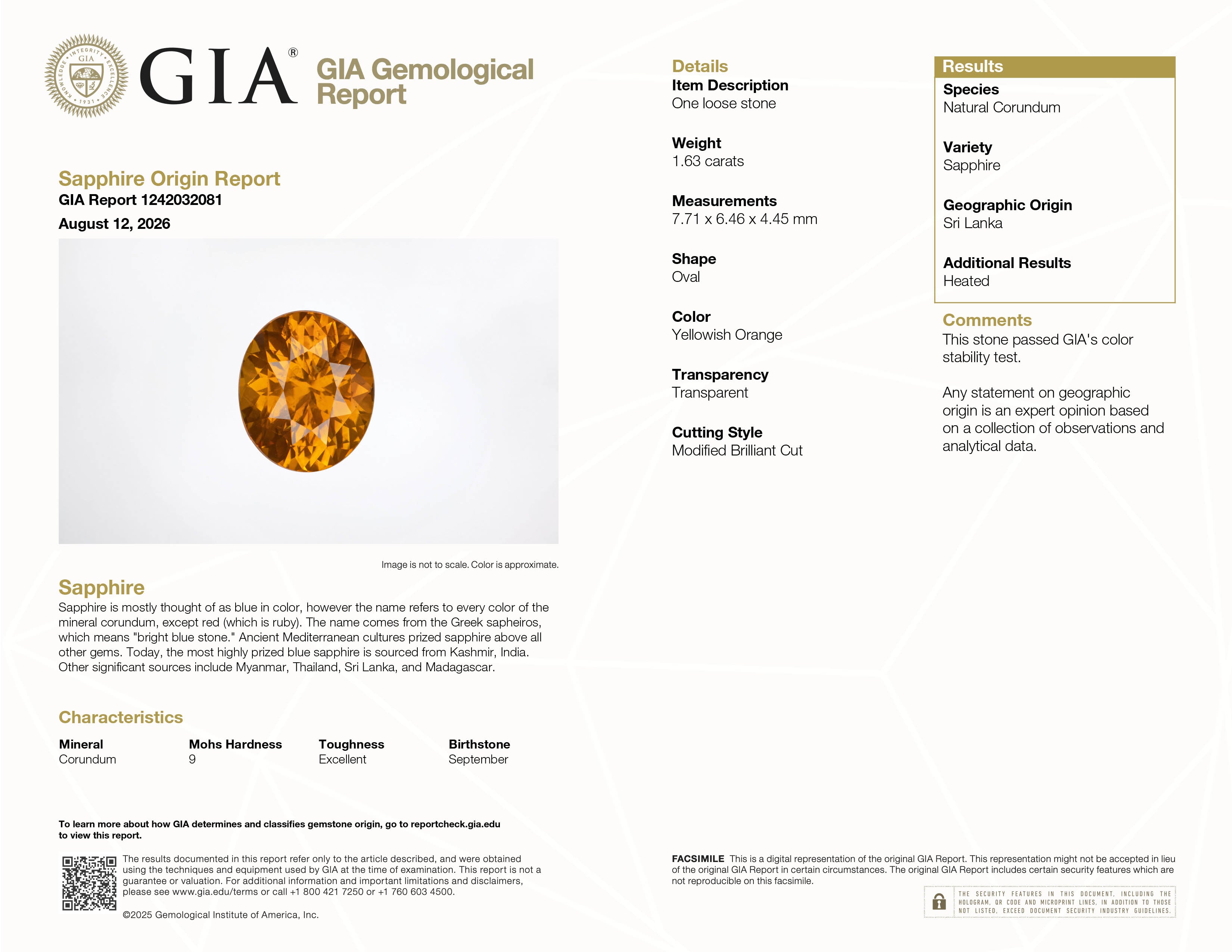
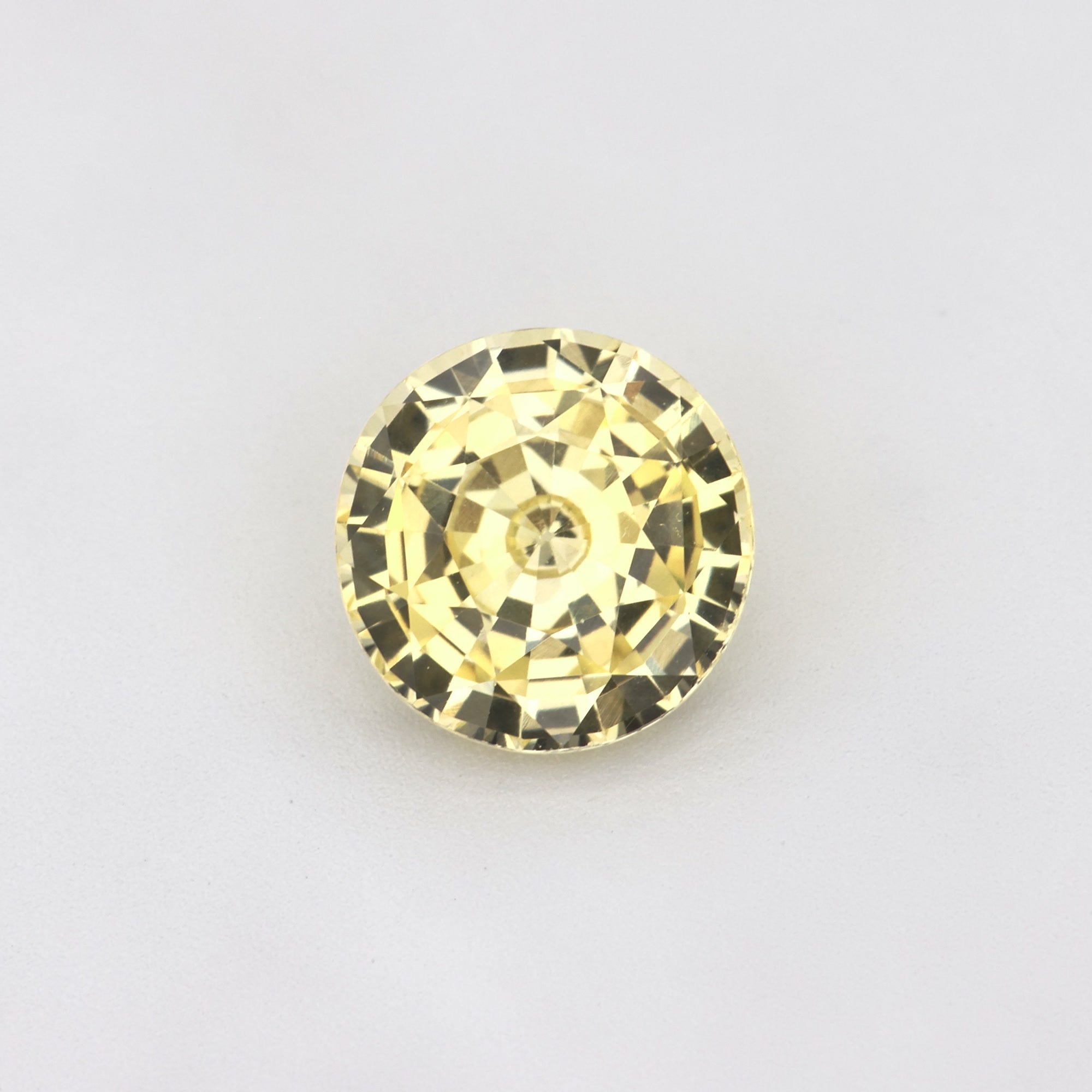
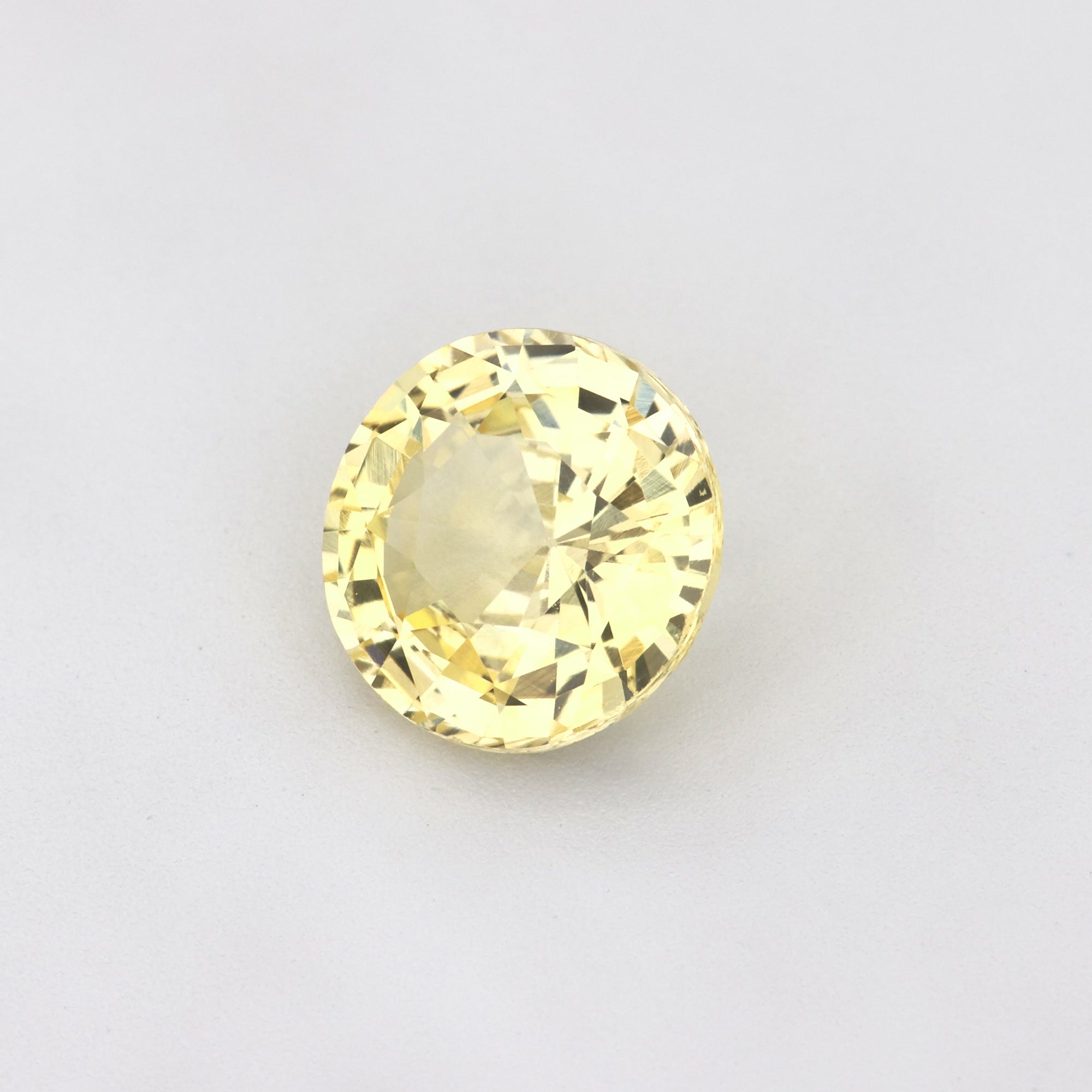
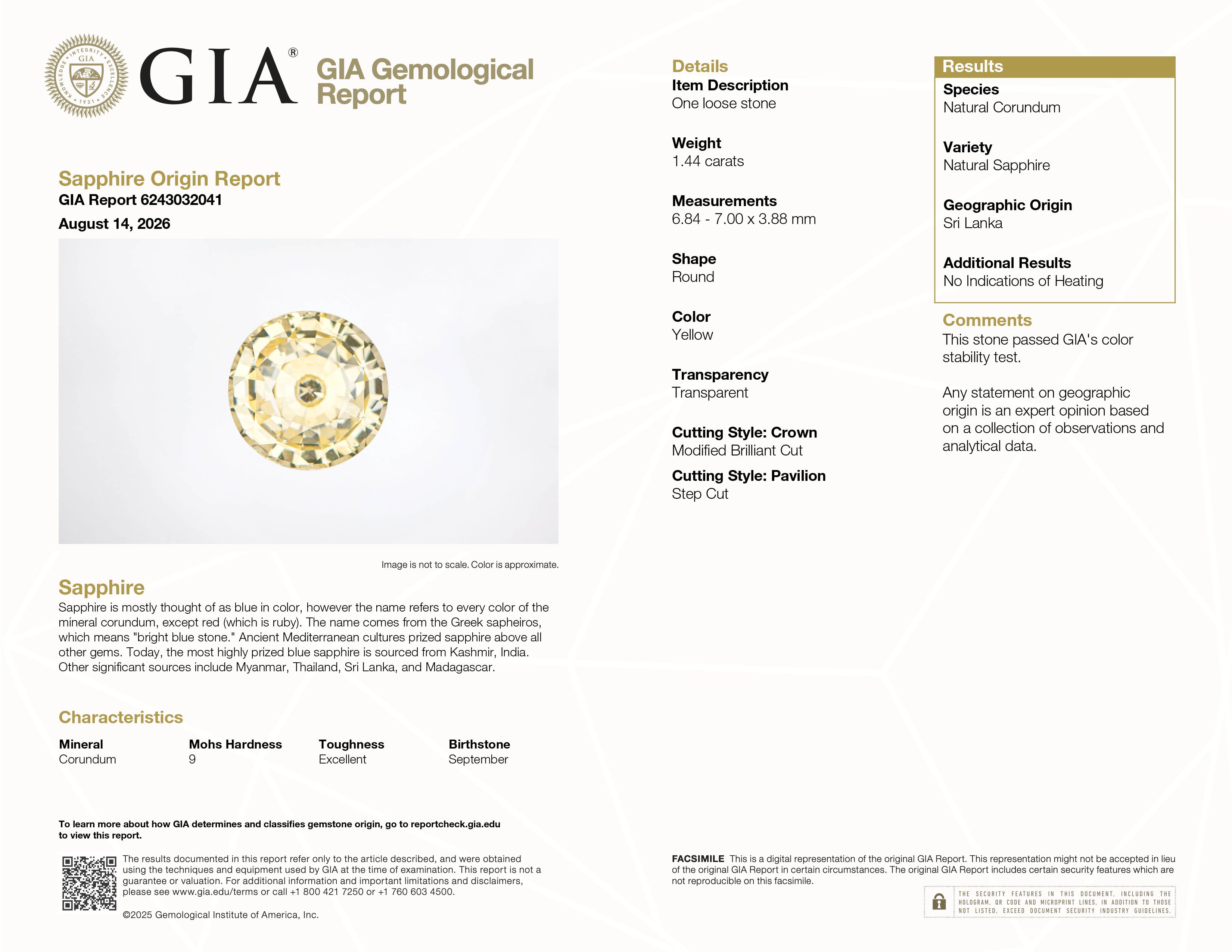
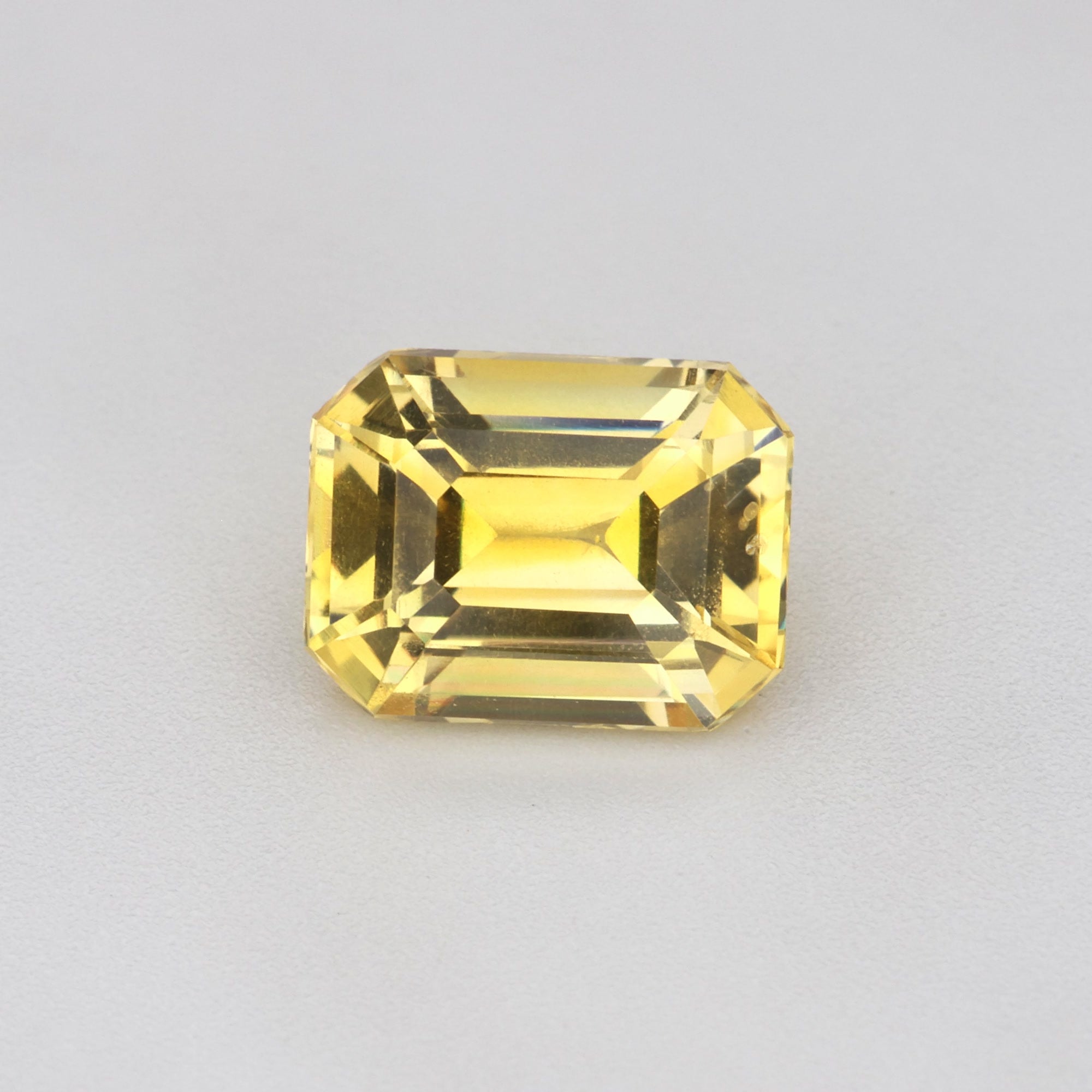
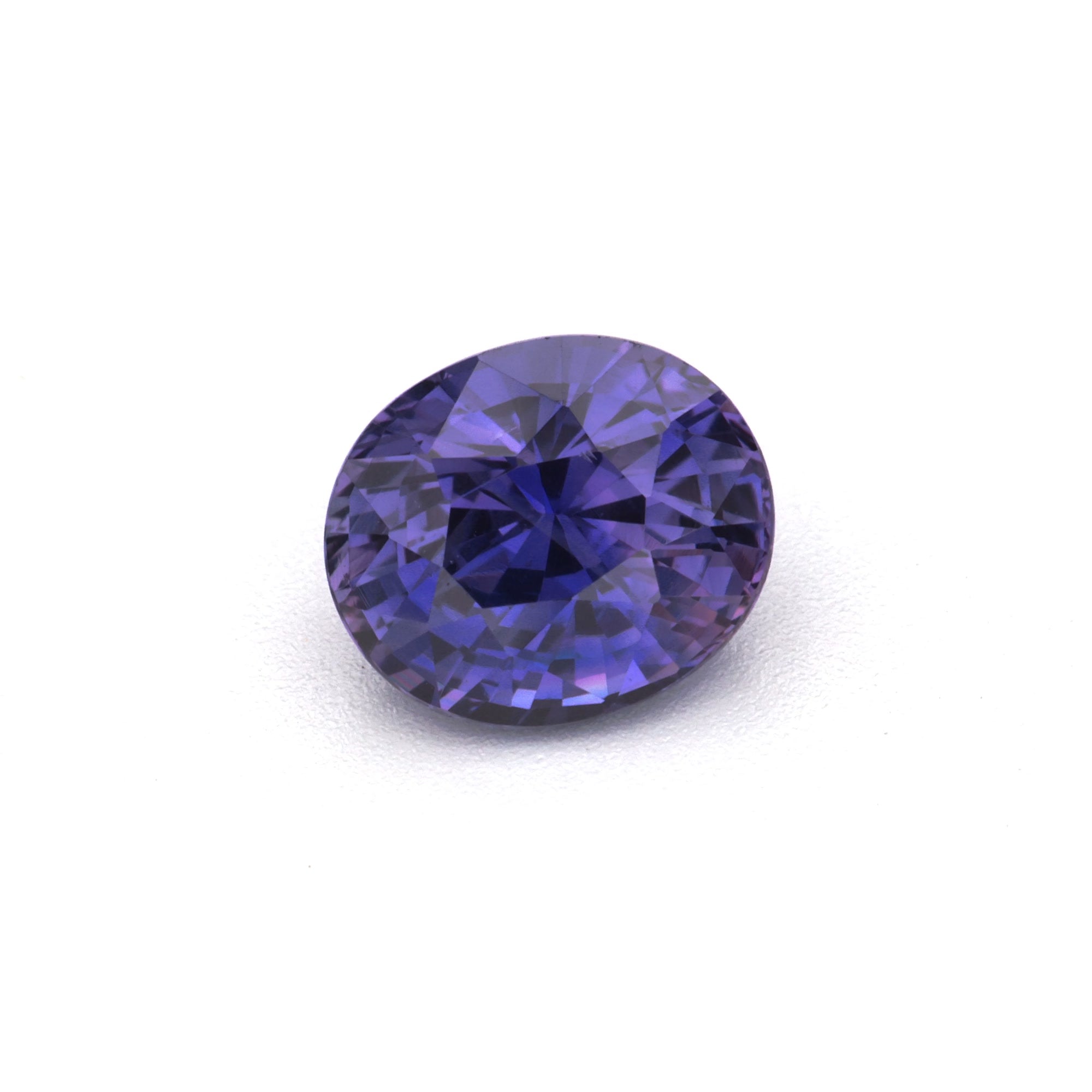
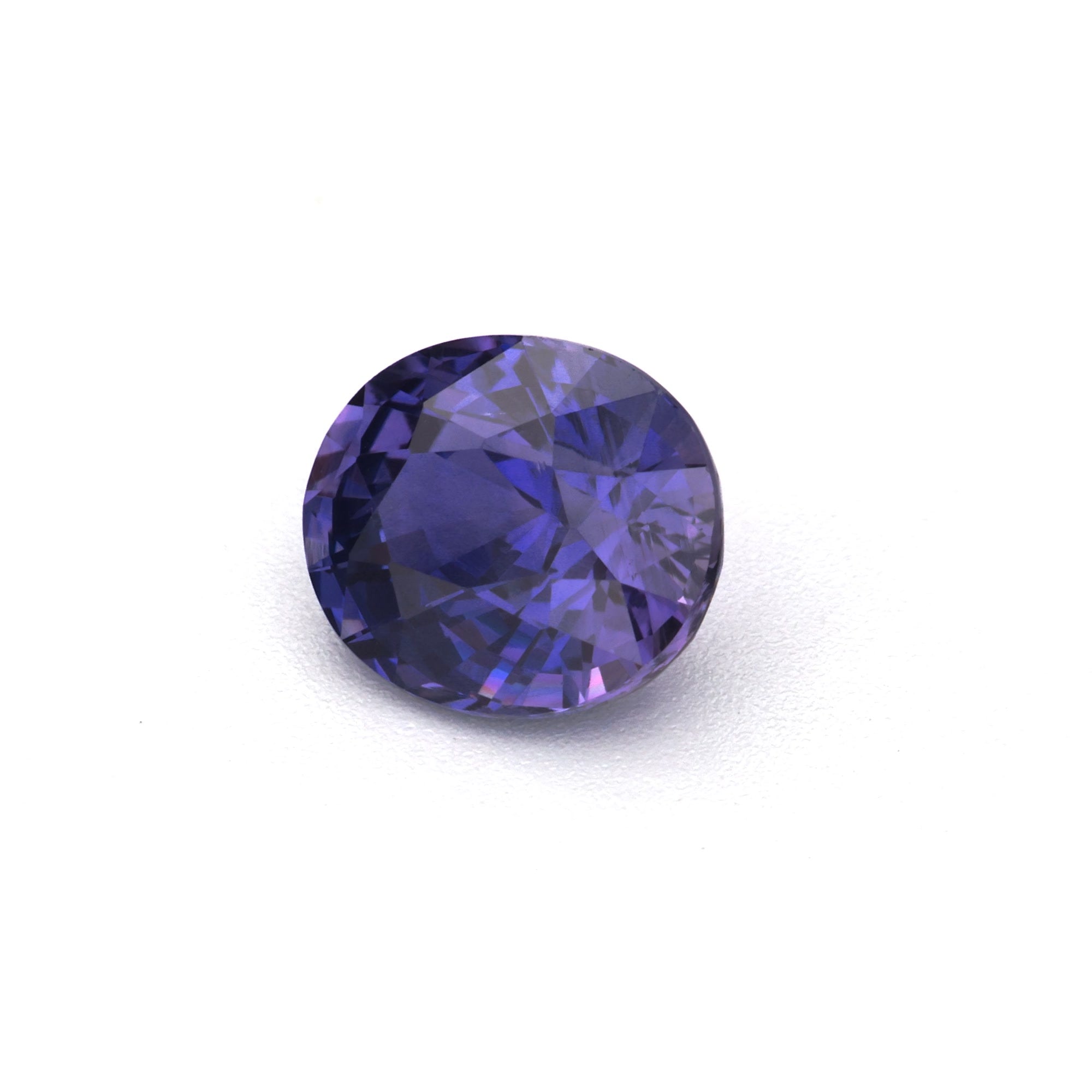
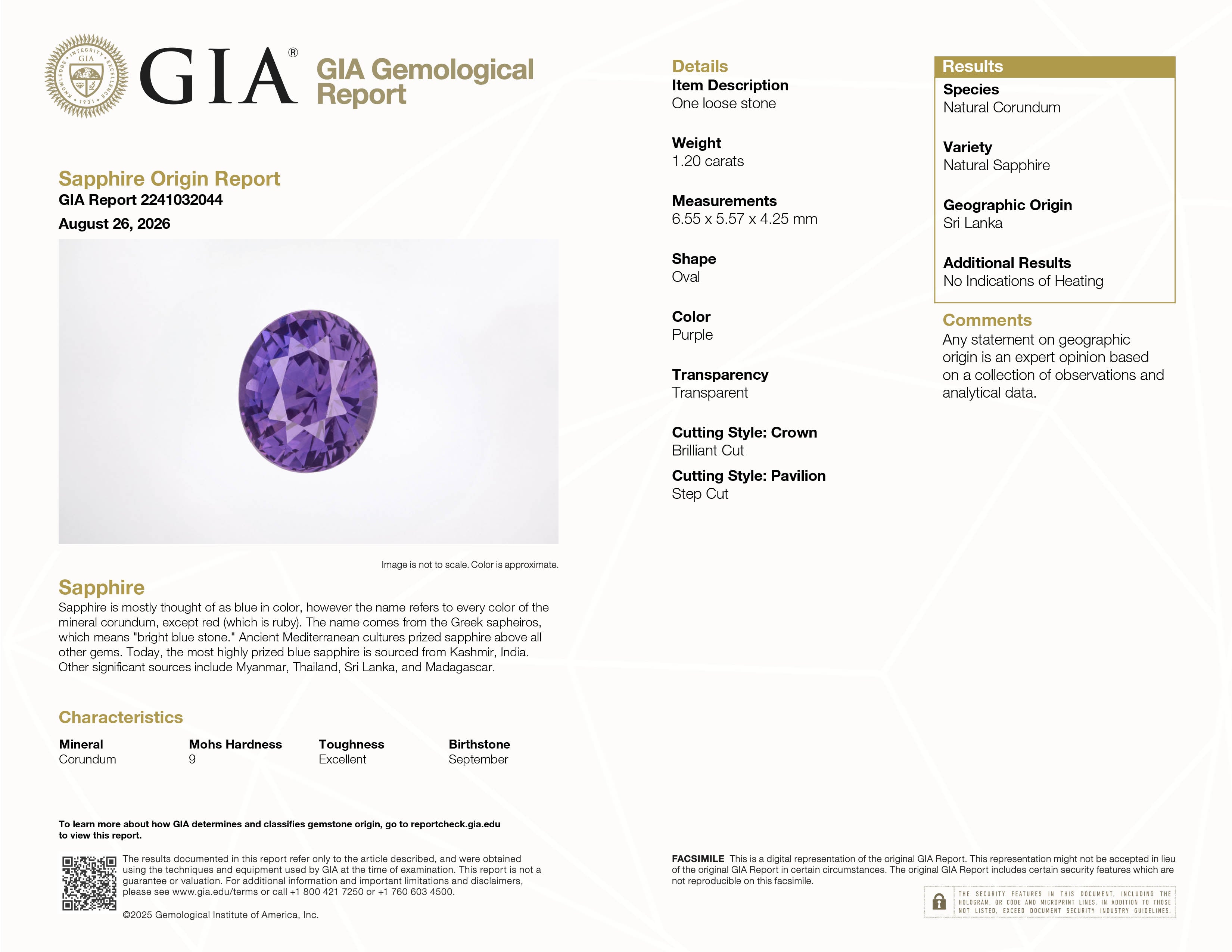
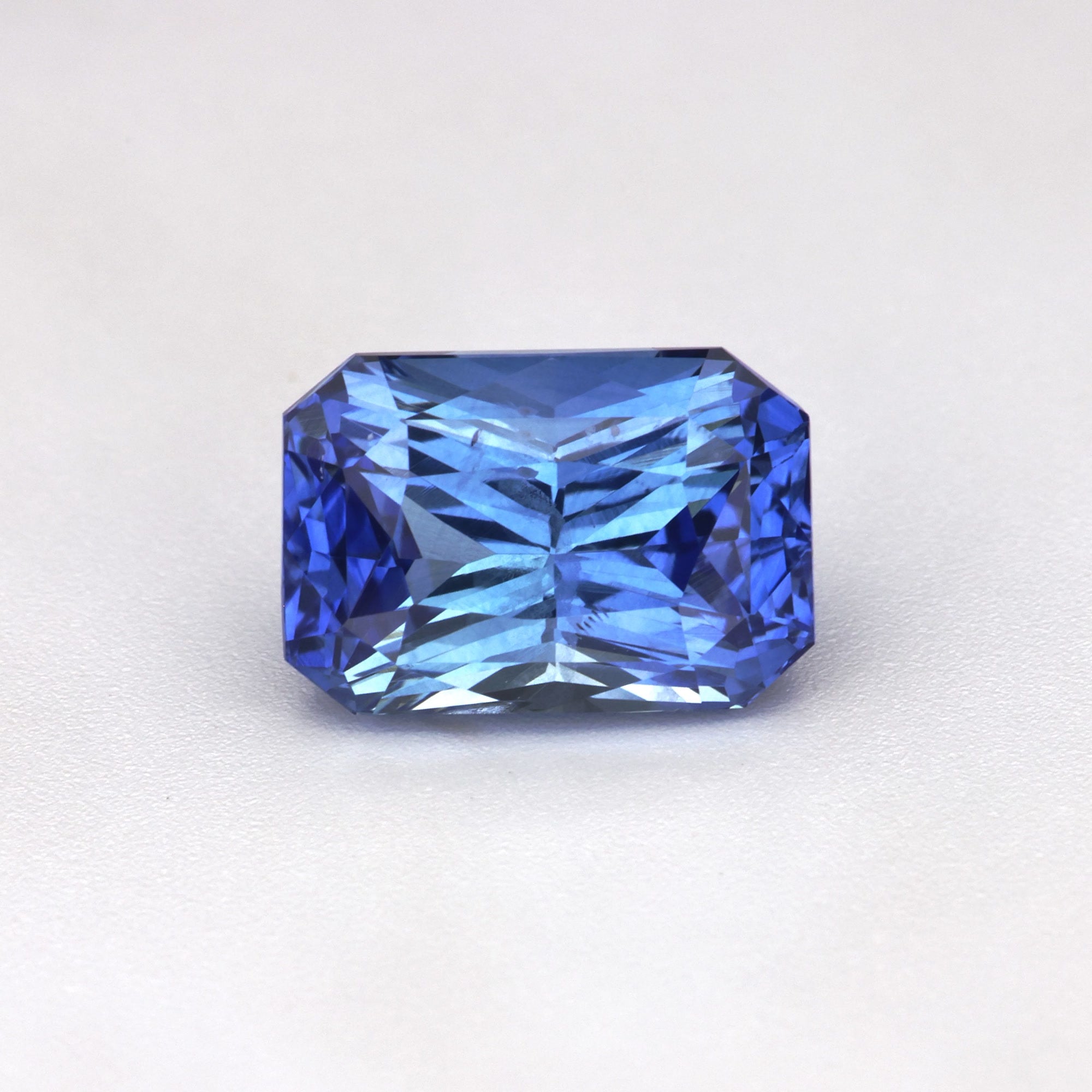
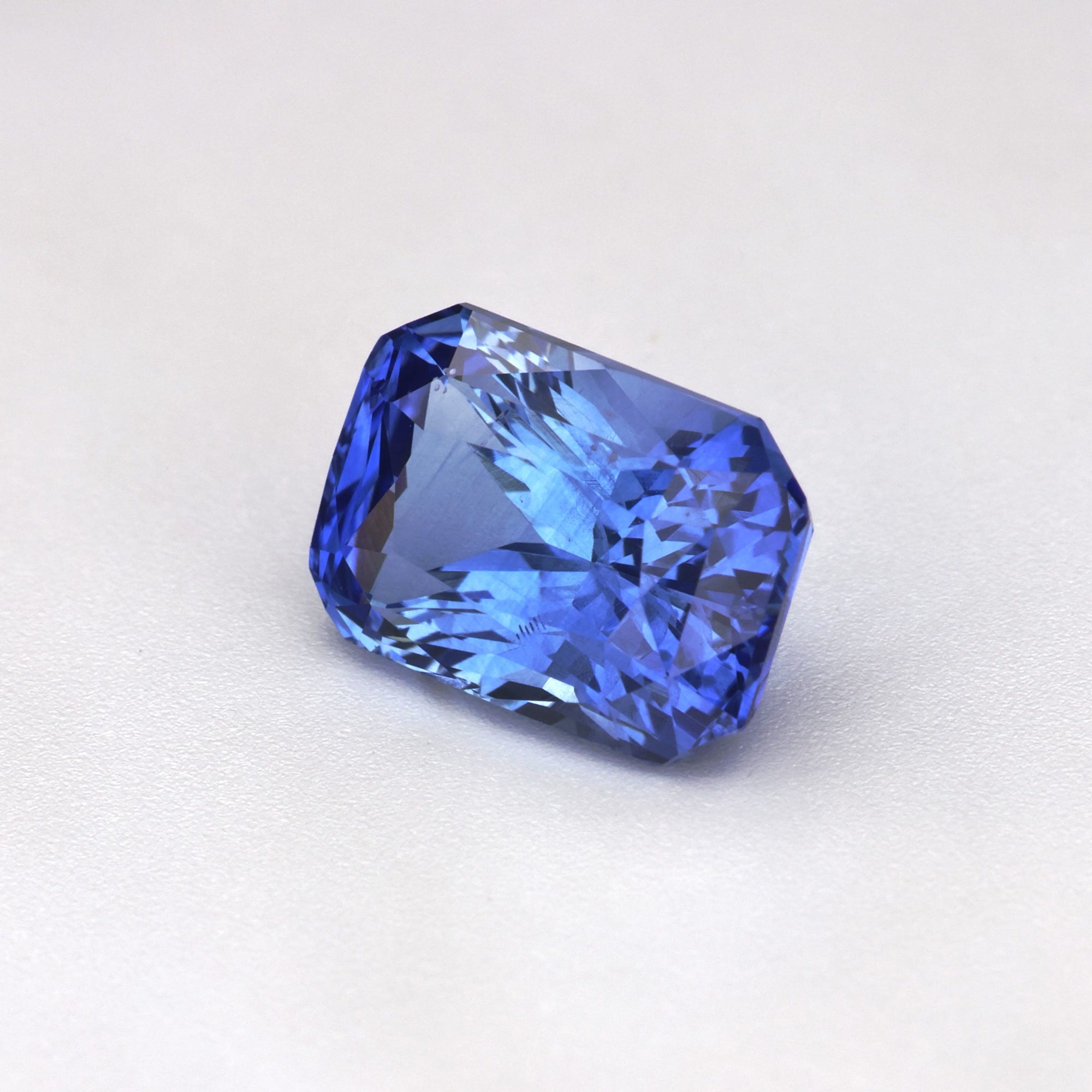
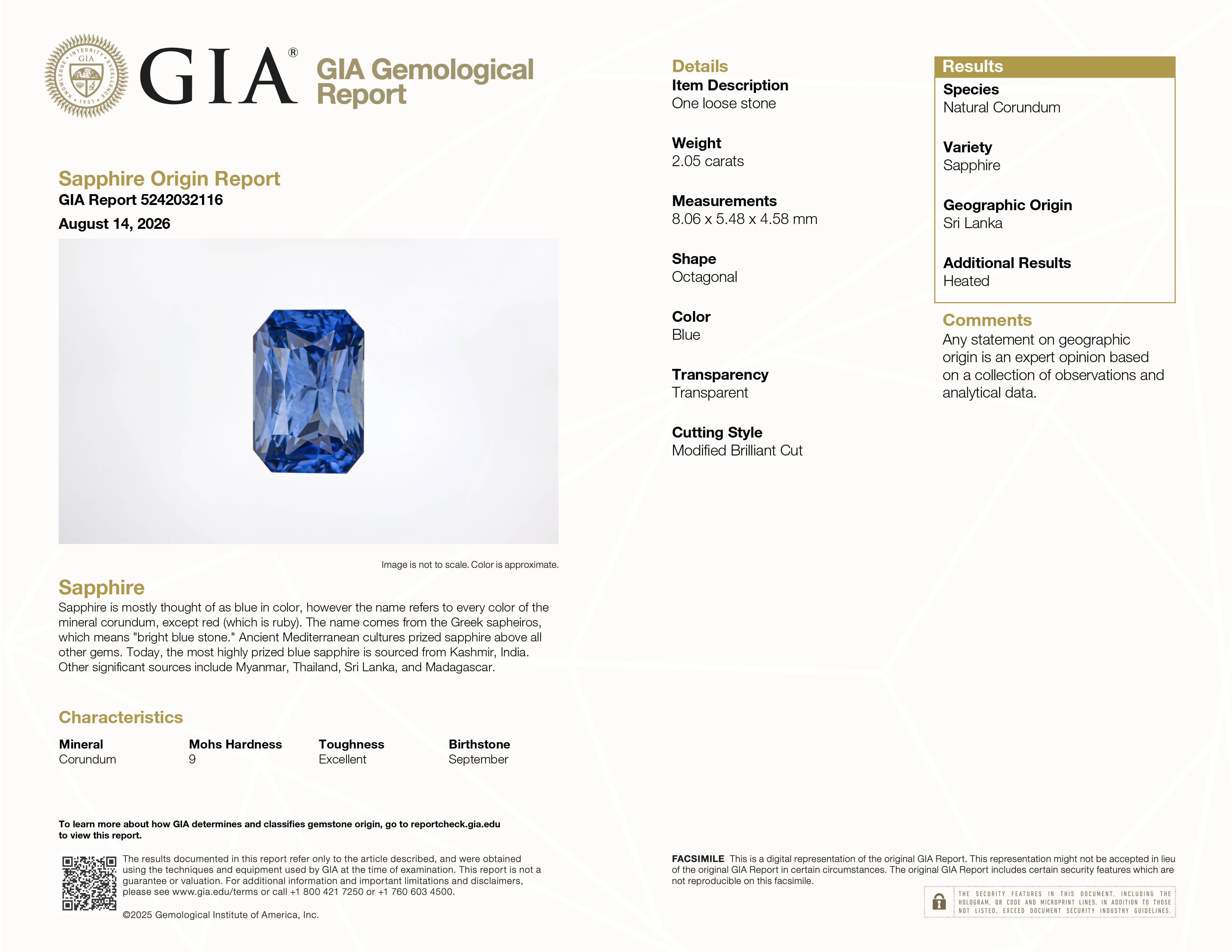
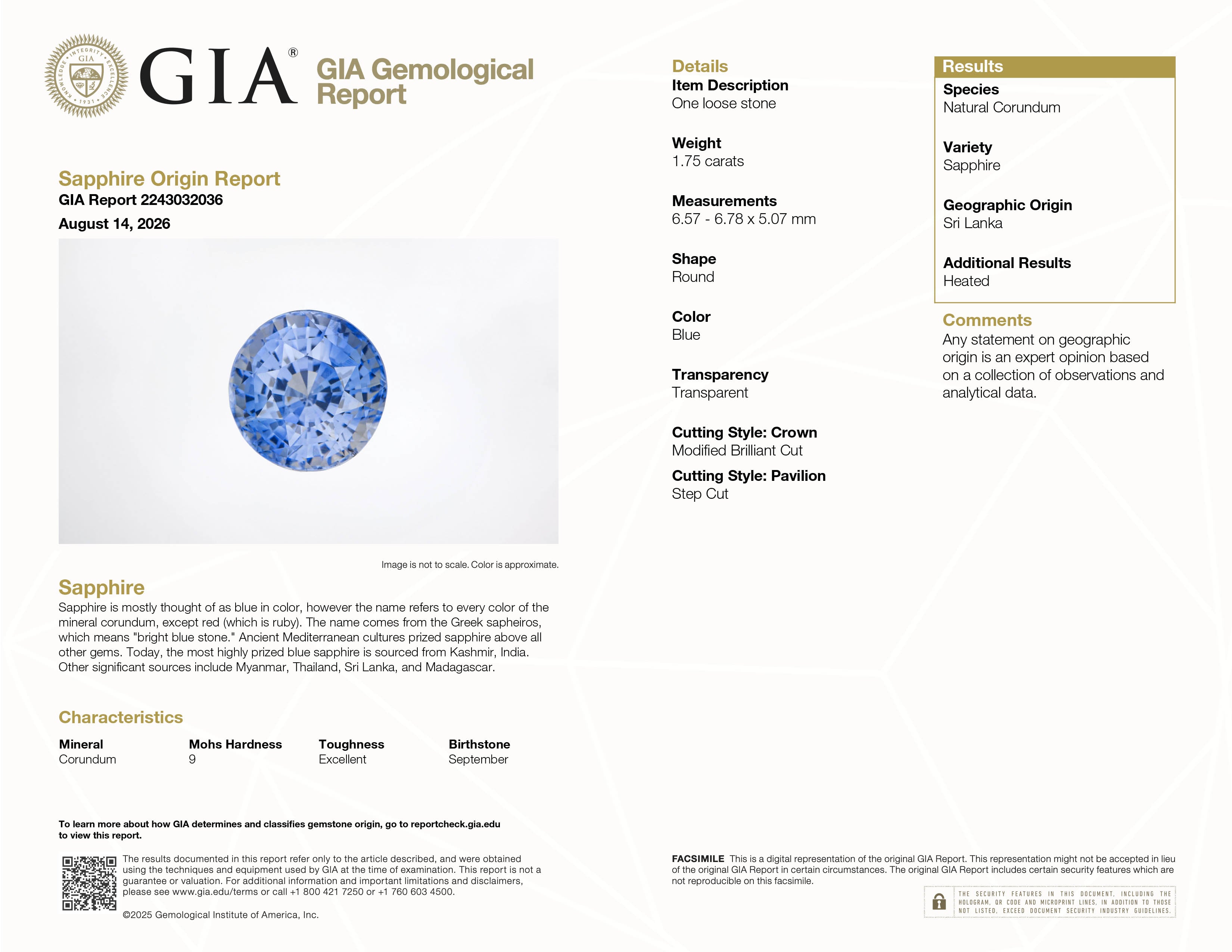
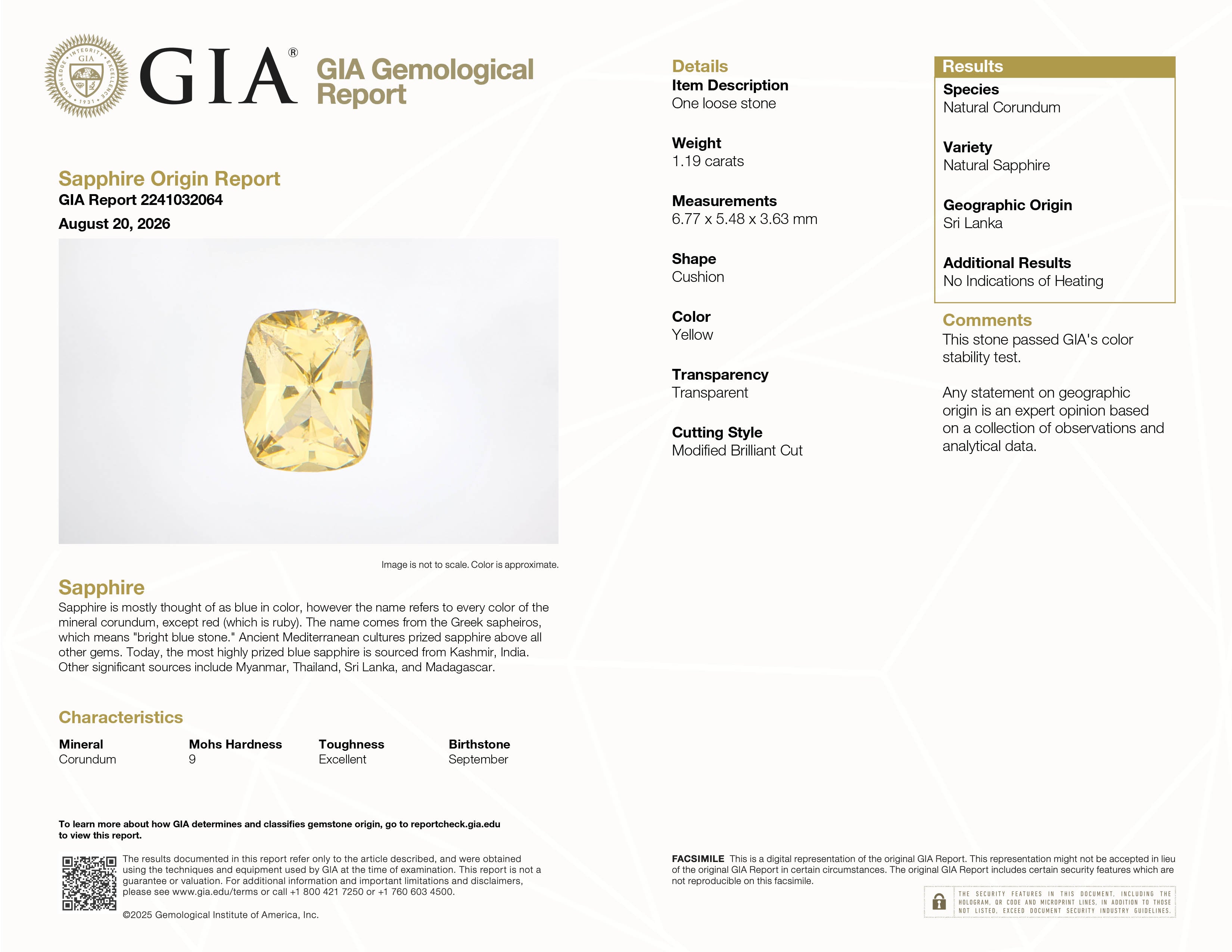
You do not need 563 carats or a royal provenance to own a natural sapphire with a documented history of its own. A well-cut loose Ceylon sapphire, sold with a laboratory report and its treatment status stated, is the same mineral, corundum, as the Star of India. The difference is scale.
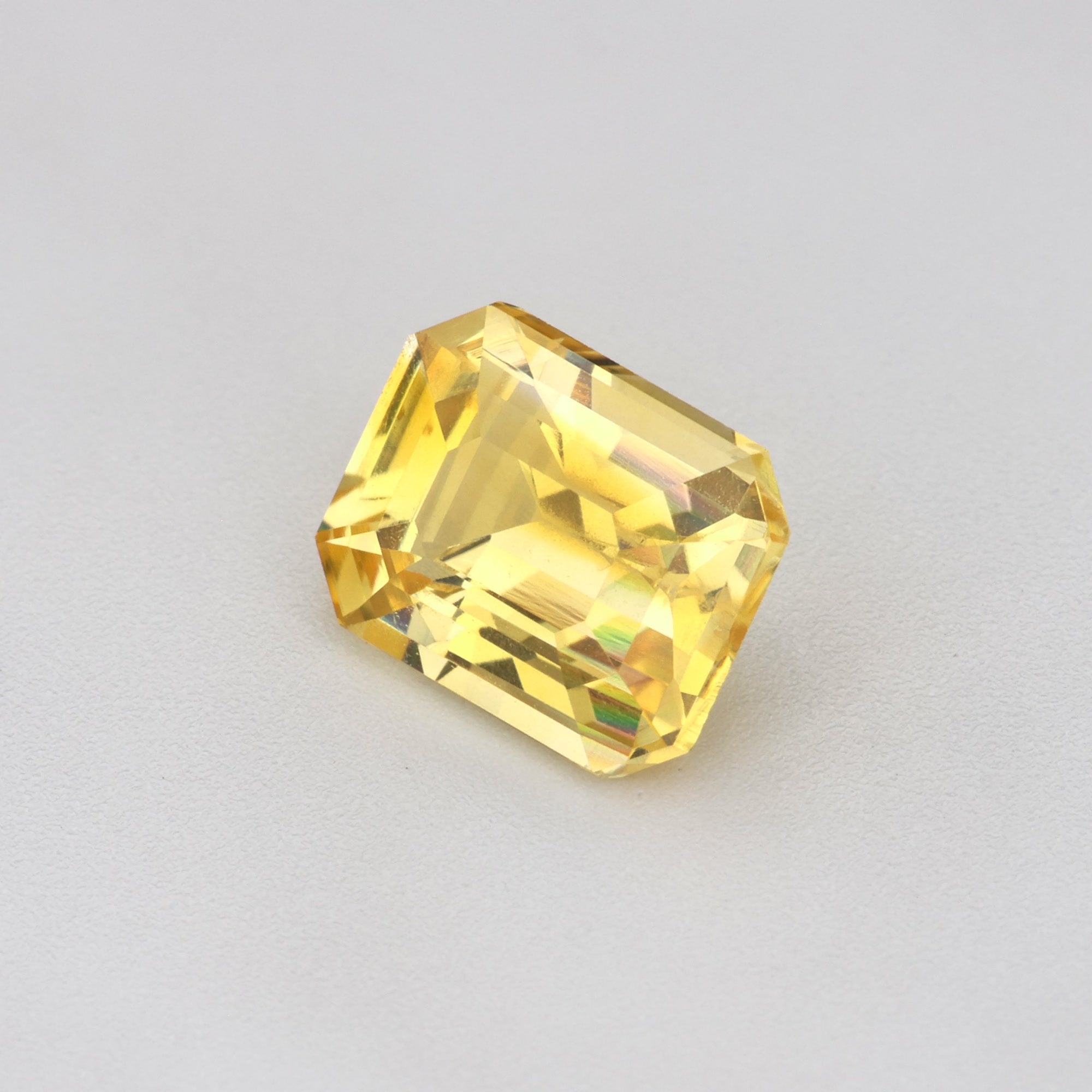
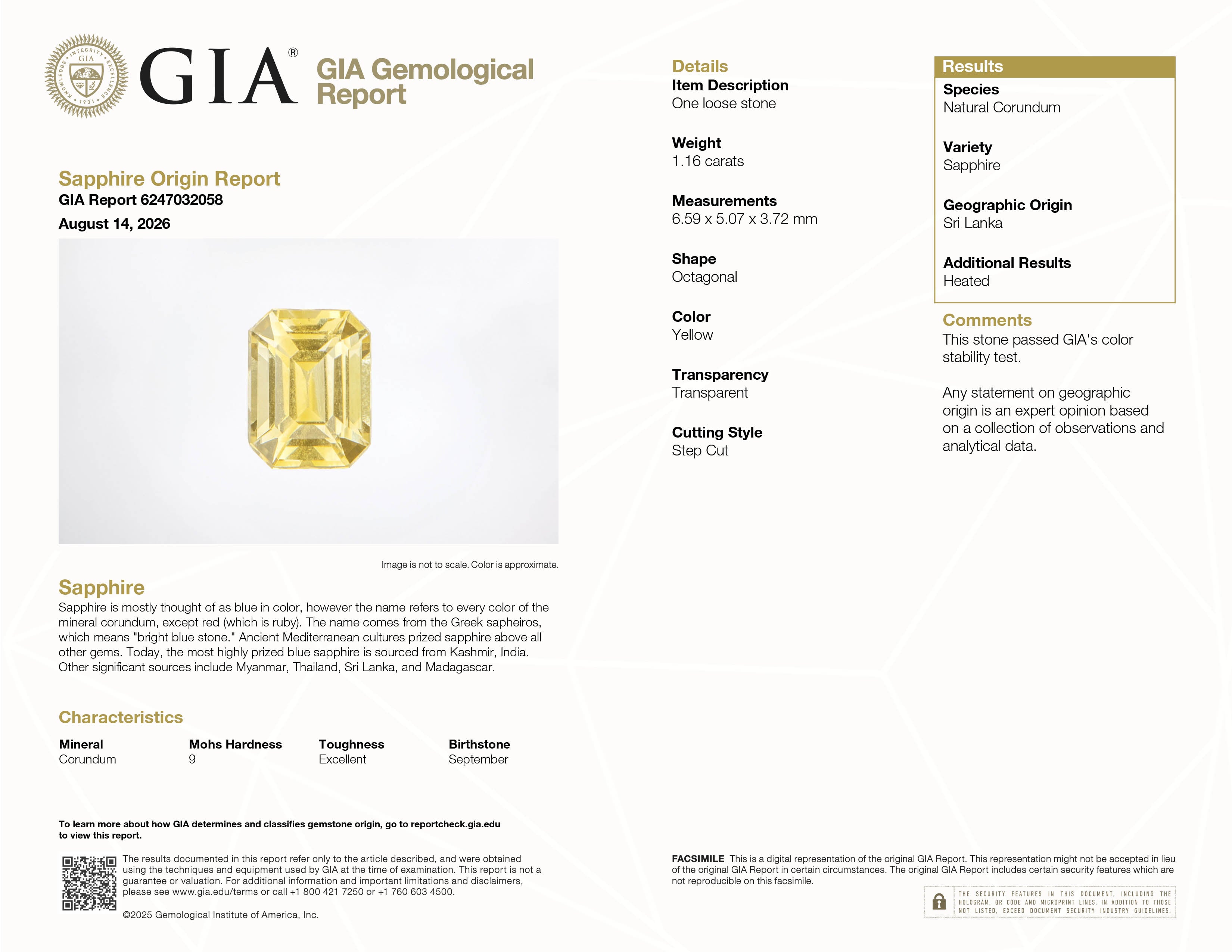
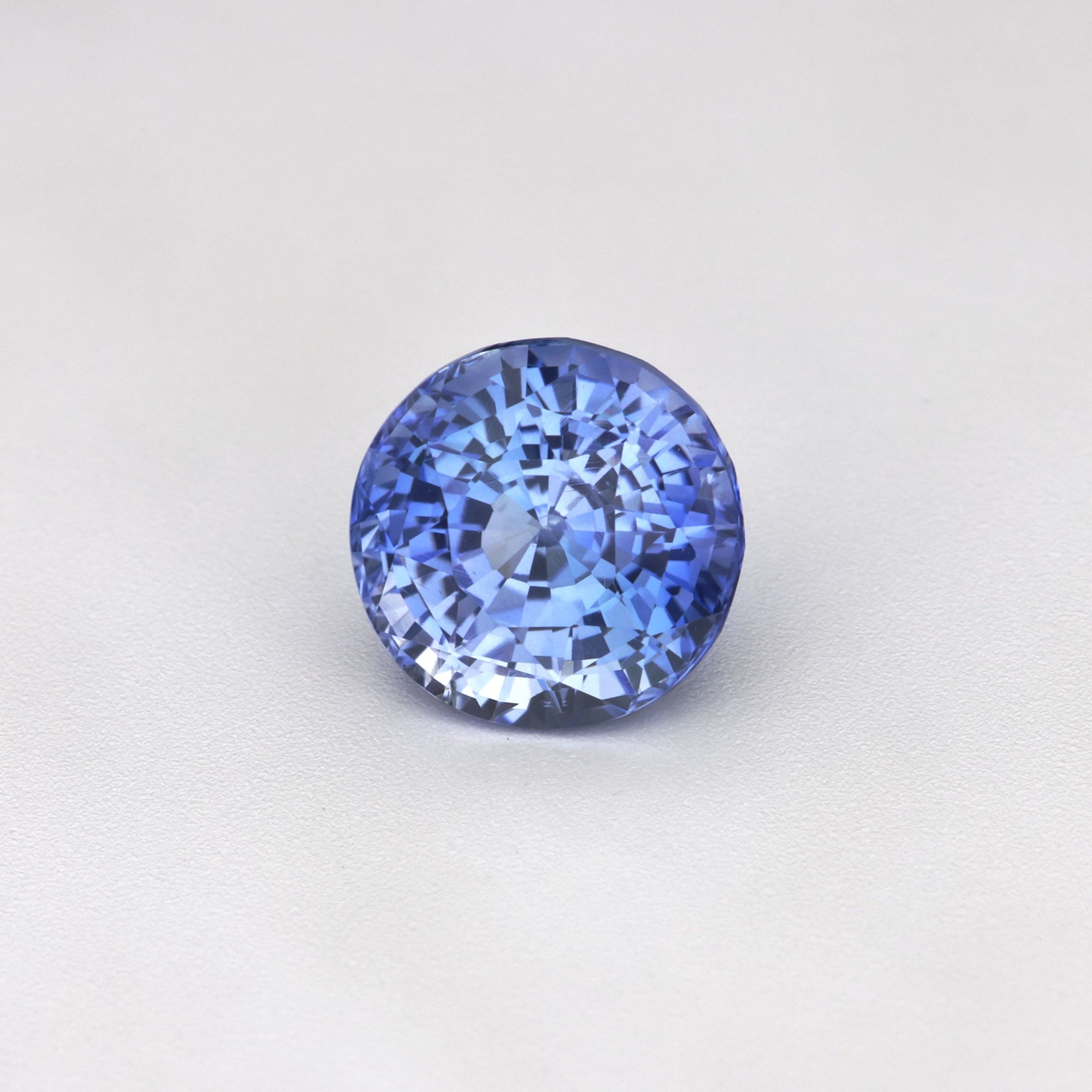
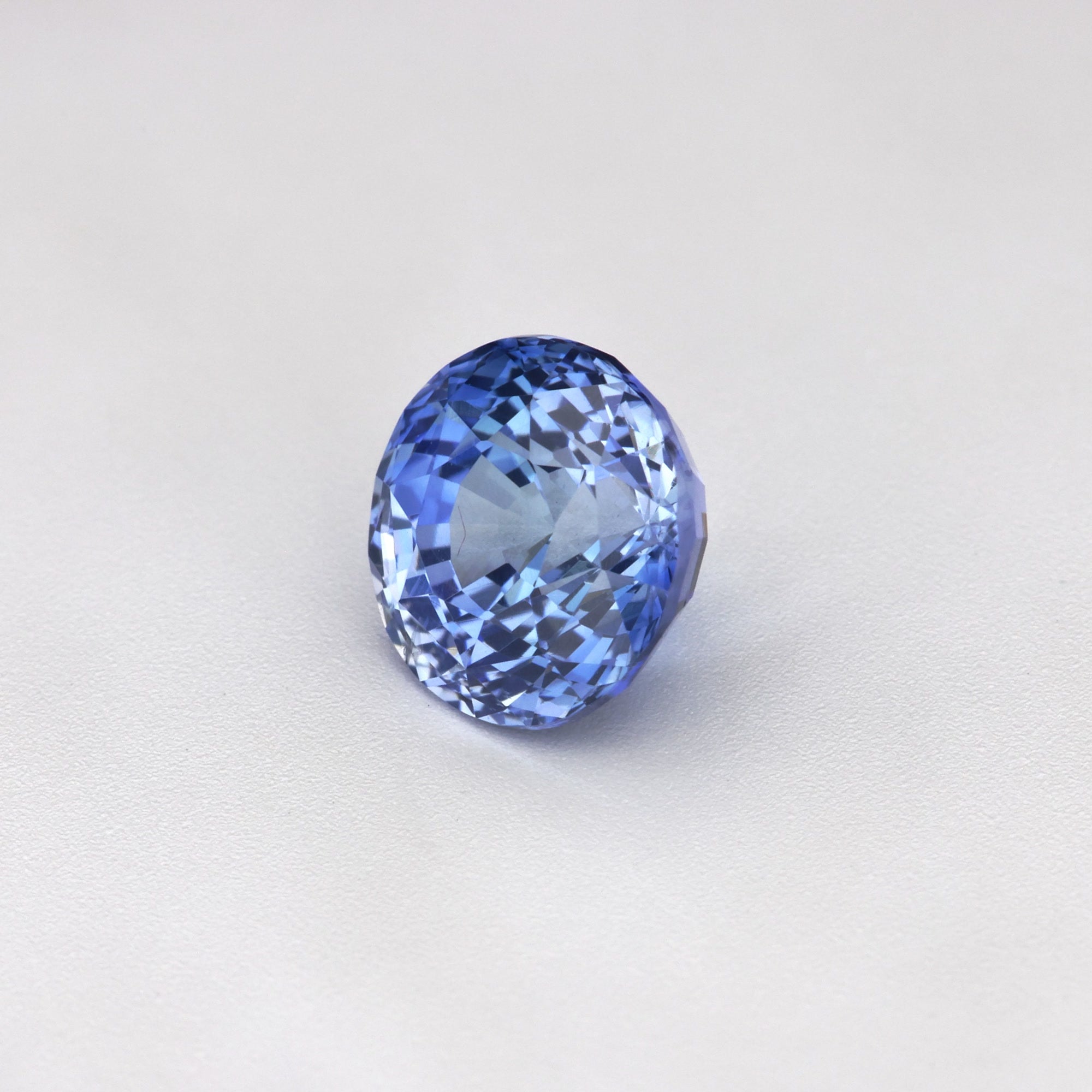
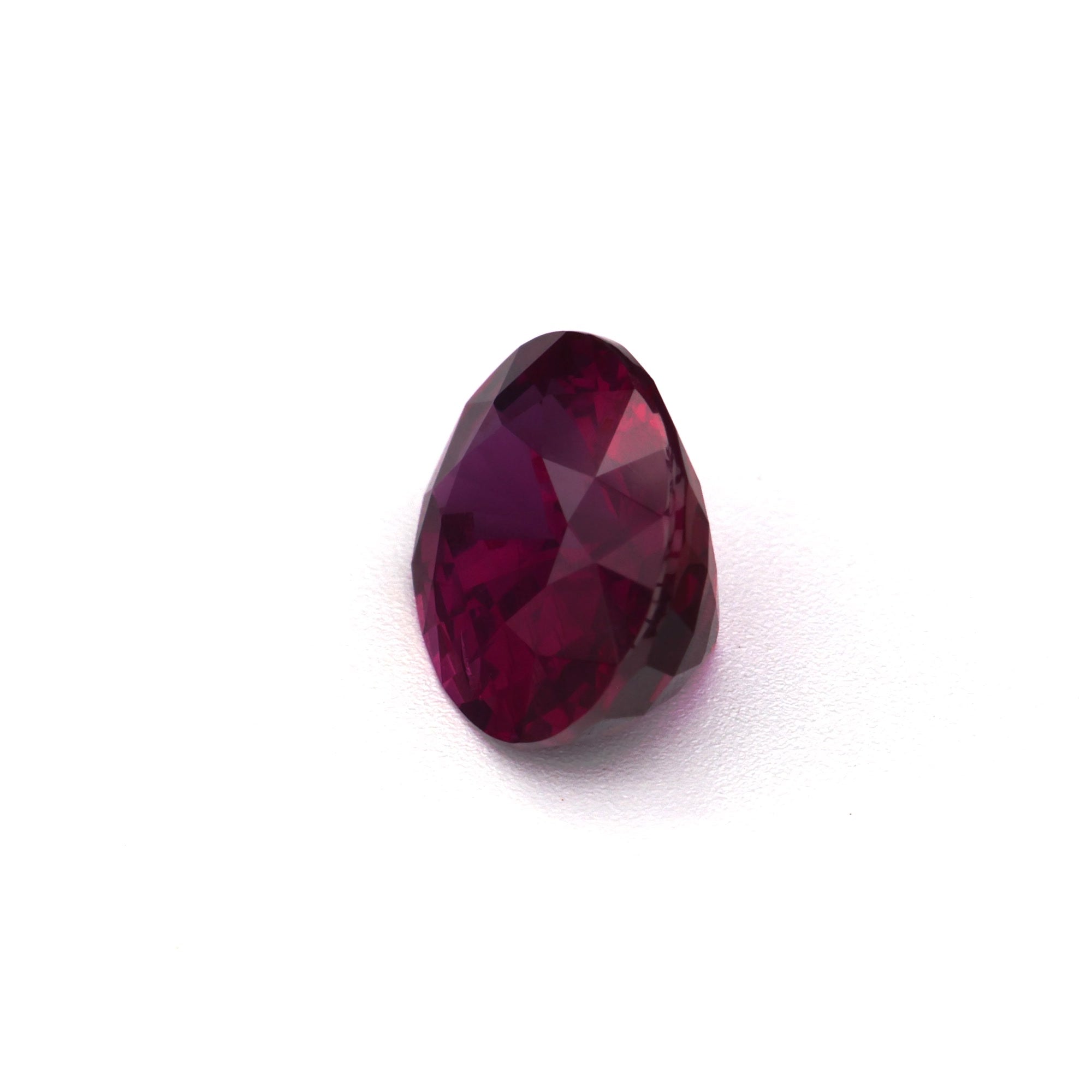
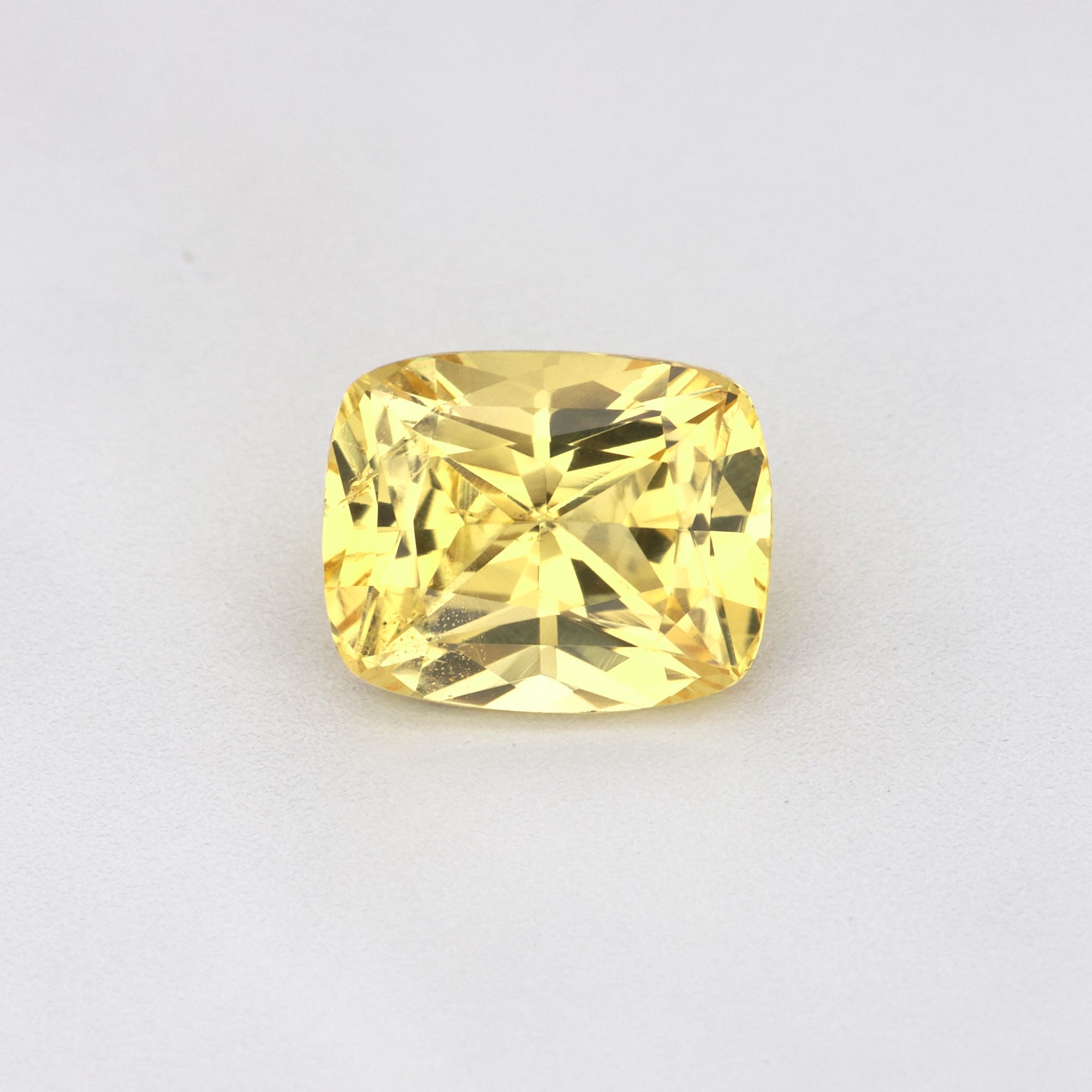
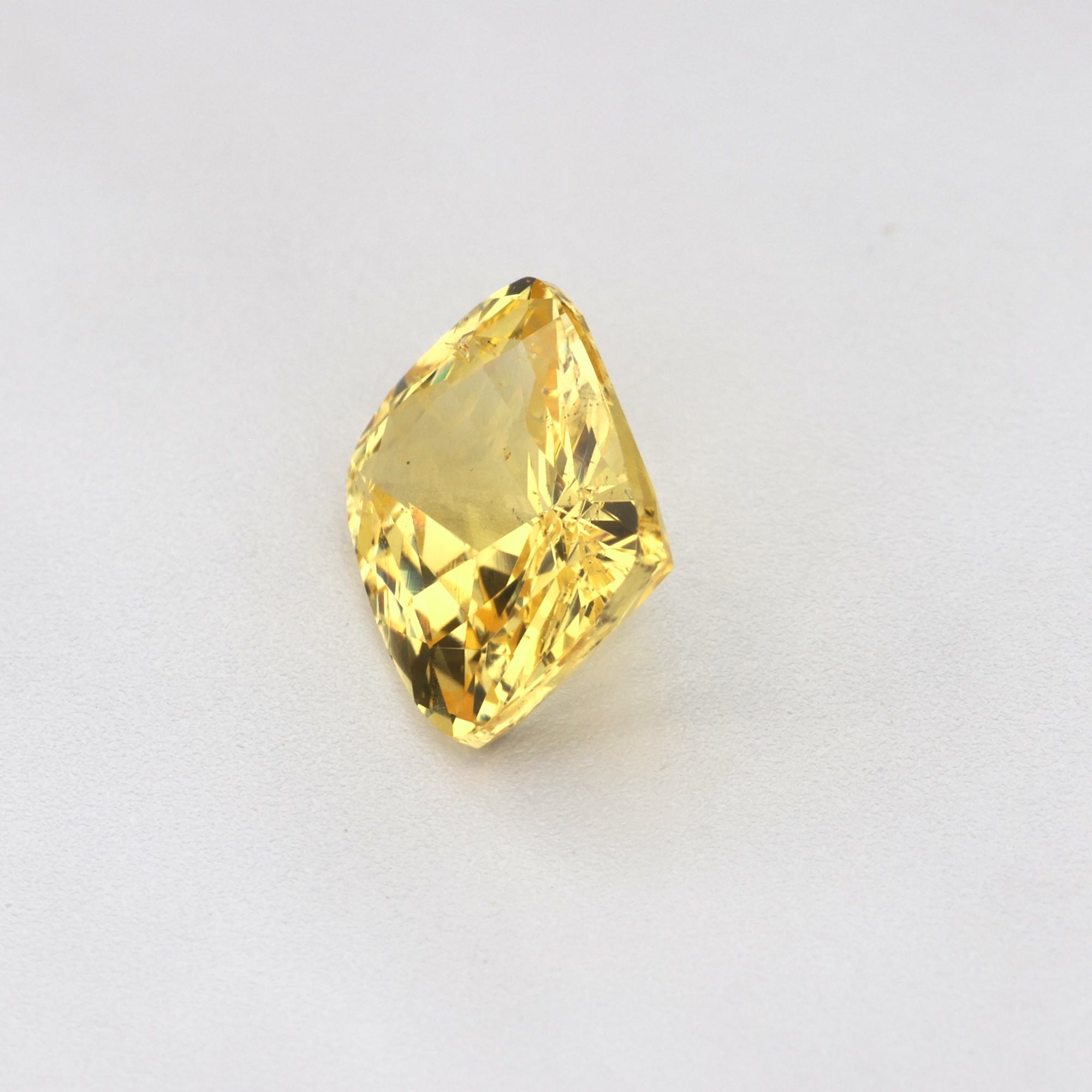
Browse our full catalog of loose stones, held in the USA. If you plan to have a stone set by a jeweller, our guide on how a custom ring is commissioned around a loose stone explains the process.

CG8465
CG8463
CG8460
CG8456


Blue Star Sapphire Price Guide — What They Cost and Why
Read moreabout Blue Star Sapphire Price Guide — What They Cost and Why
Tsavorite Garnet Price Guide — What They Cost and Why
Read moreabout Tsavorite Garnet Price Guide — What They Cost and Why
Color-Change Sapphire Price Guide — What They Cost and Why
Read moreabout Color-Change Sapphire Price Guide — What They Cost and Why
Is Cat's-Eye Chrysoberyl Good for an Engagement Ring?
Read moreabout Is Cat's-Eye Chrysoberyl Good for an Engagement Ring?
Cat's Eye Chrysoberyl Price Guide — What They Cost and Why
Read moreabout Cat's Eye Chrysoberyl Price Guide — What They Cost and Why















Share: