- von Ahmed Shareek
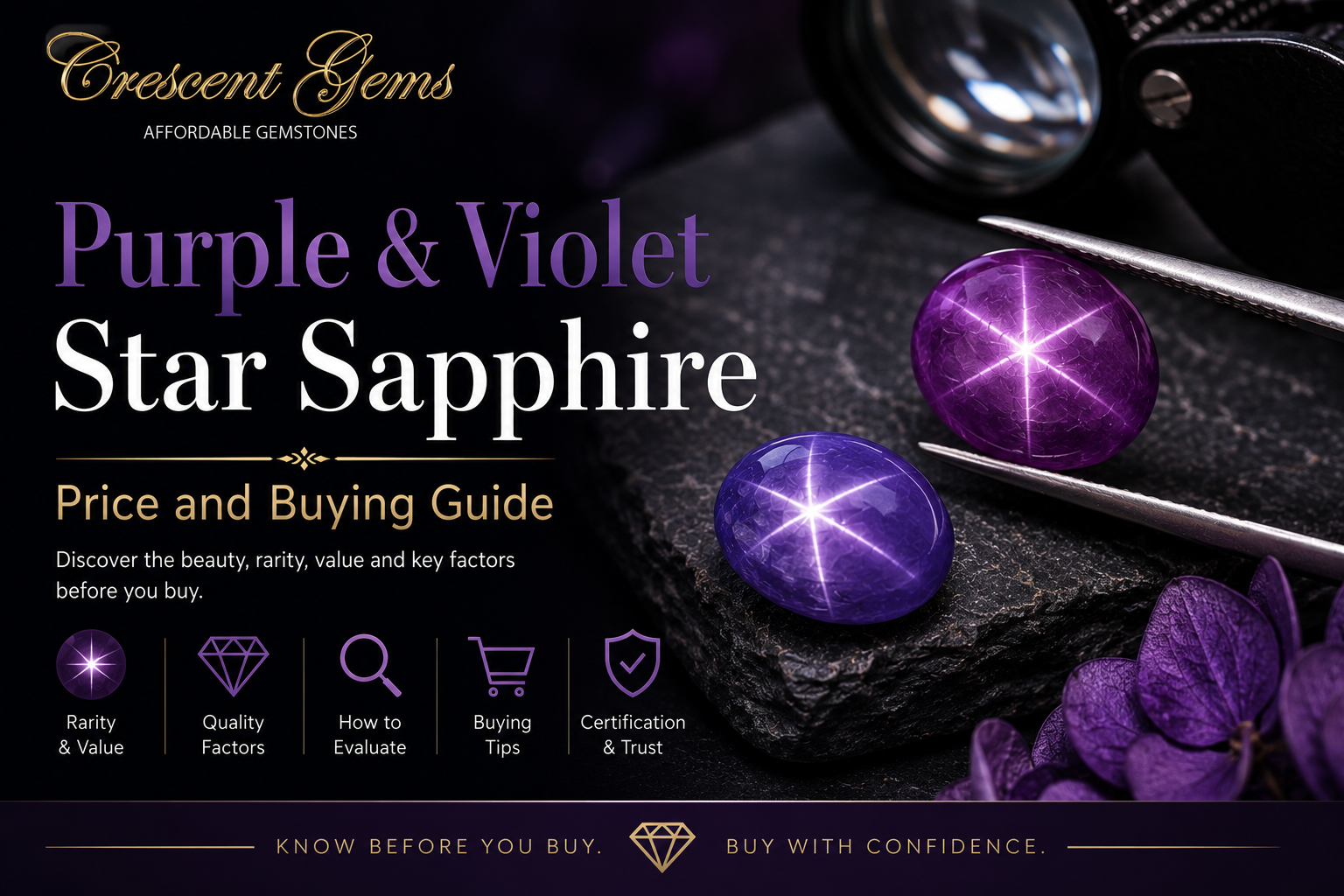
Purple & Violet Star Sapphire — Price and Buying Guide
- von Ahmed Shareek

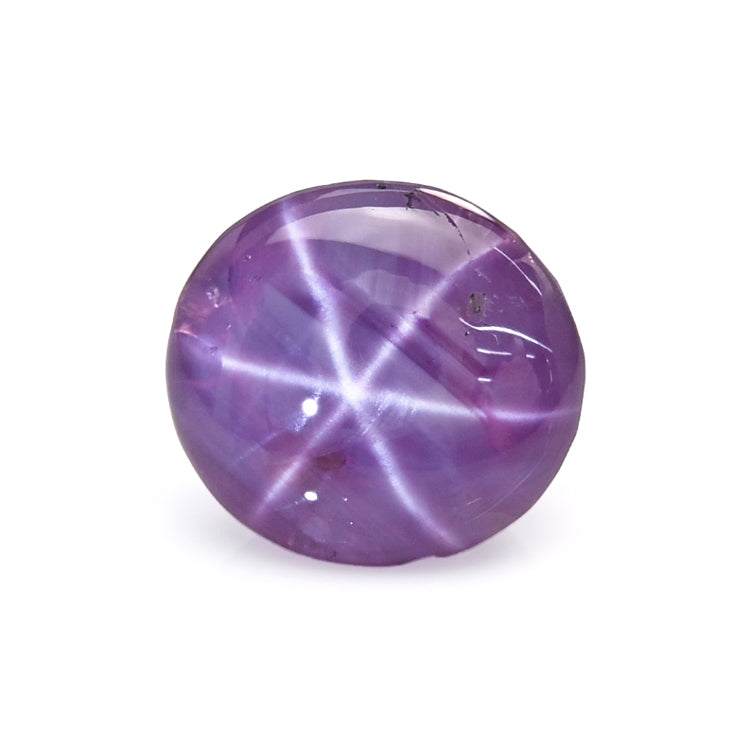
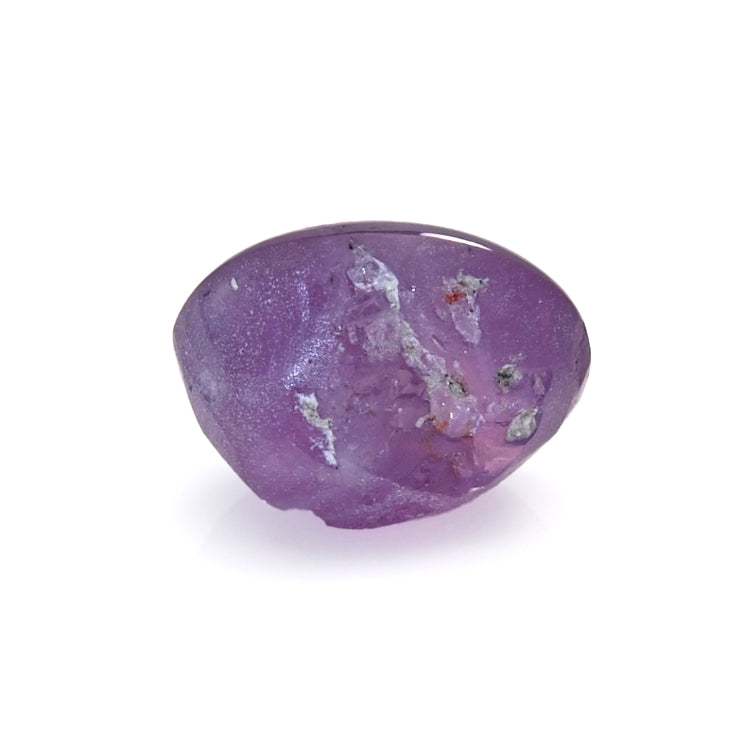
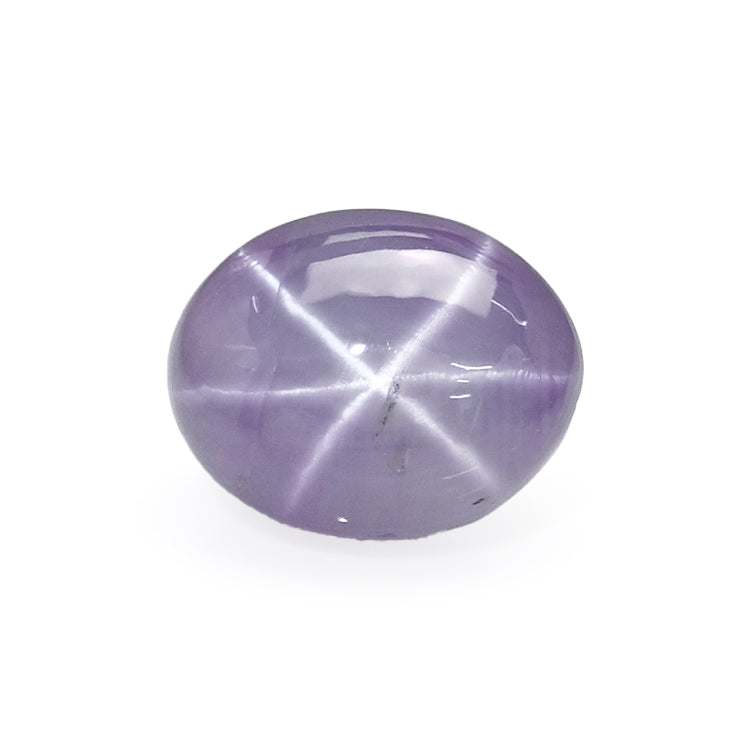
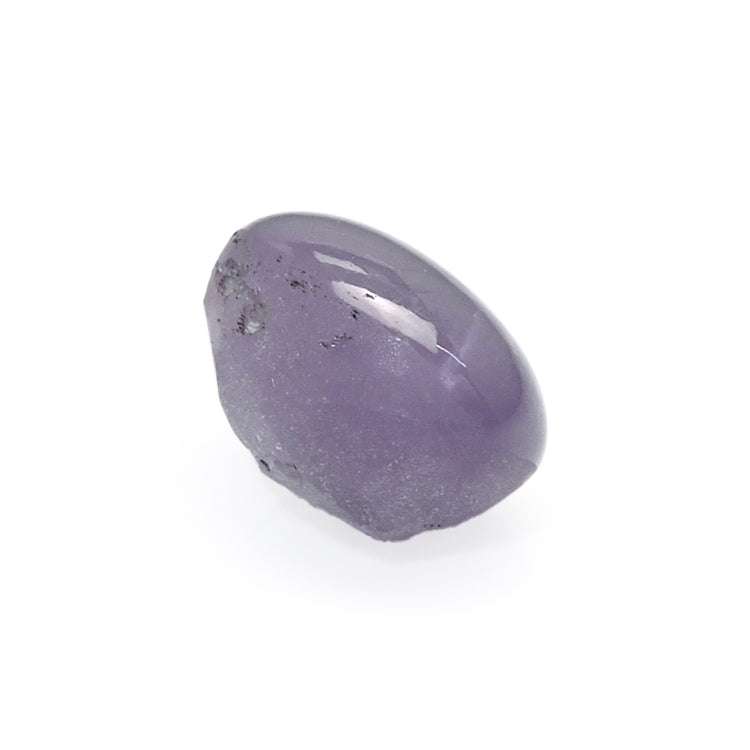
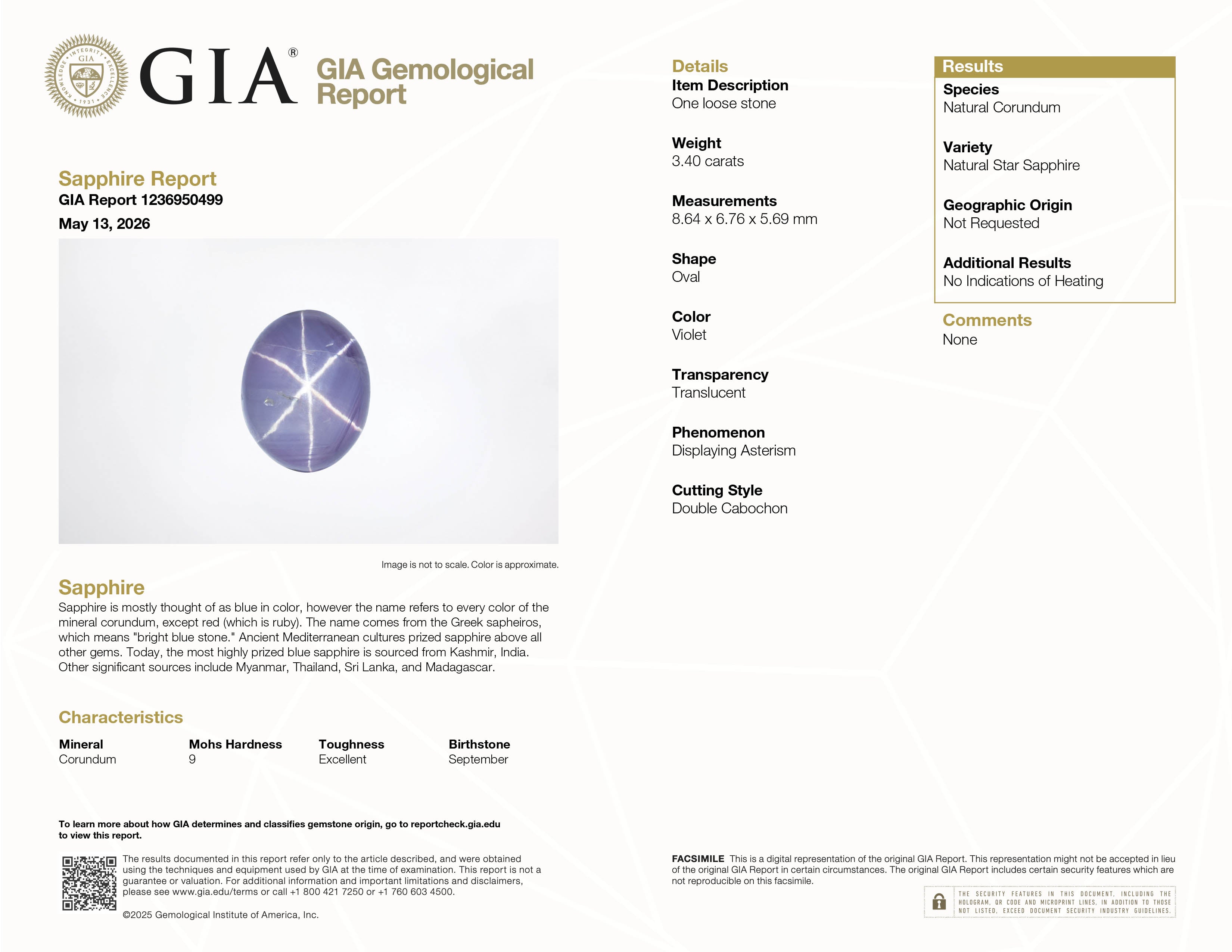
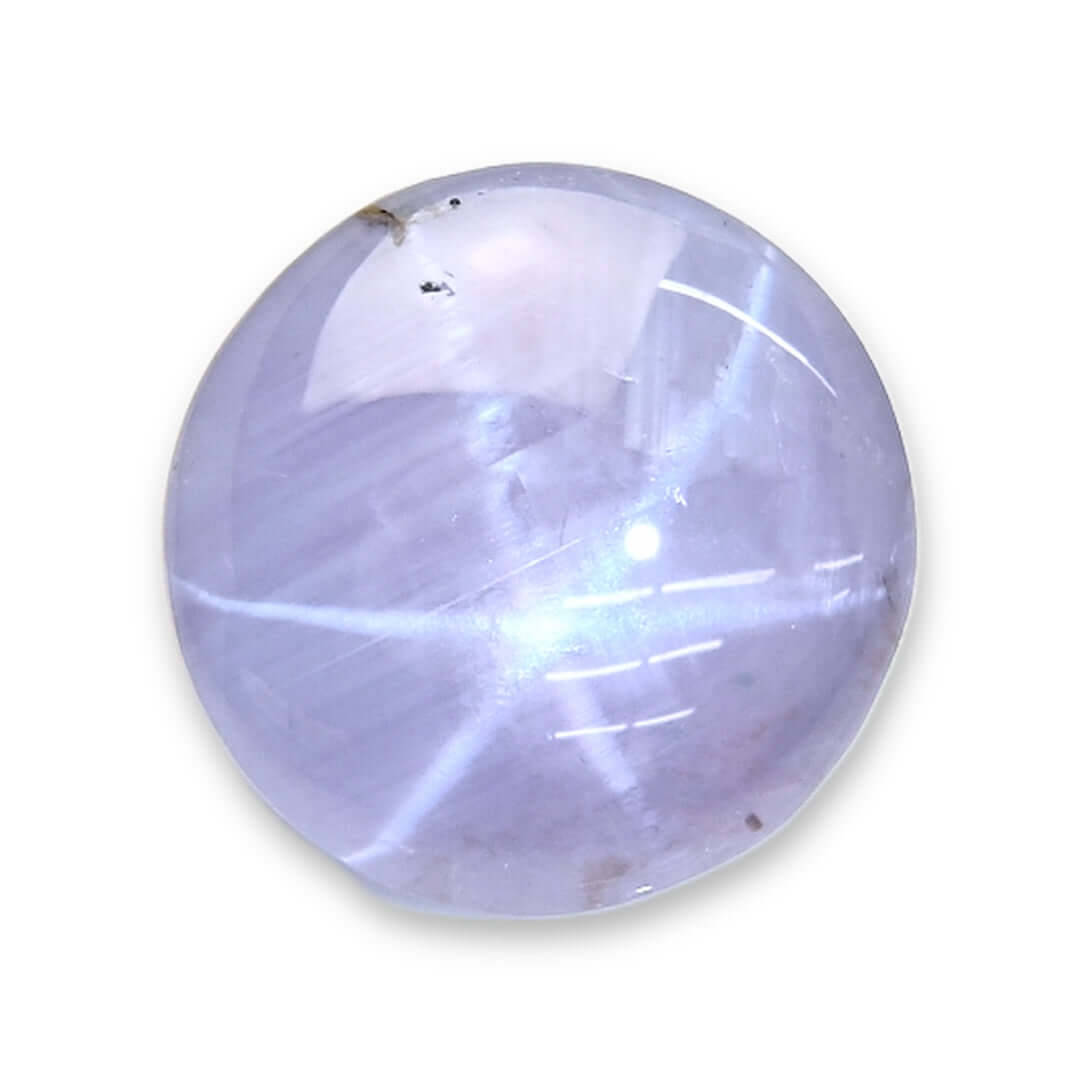
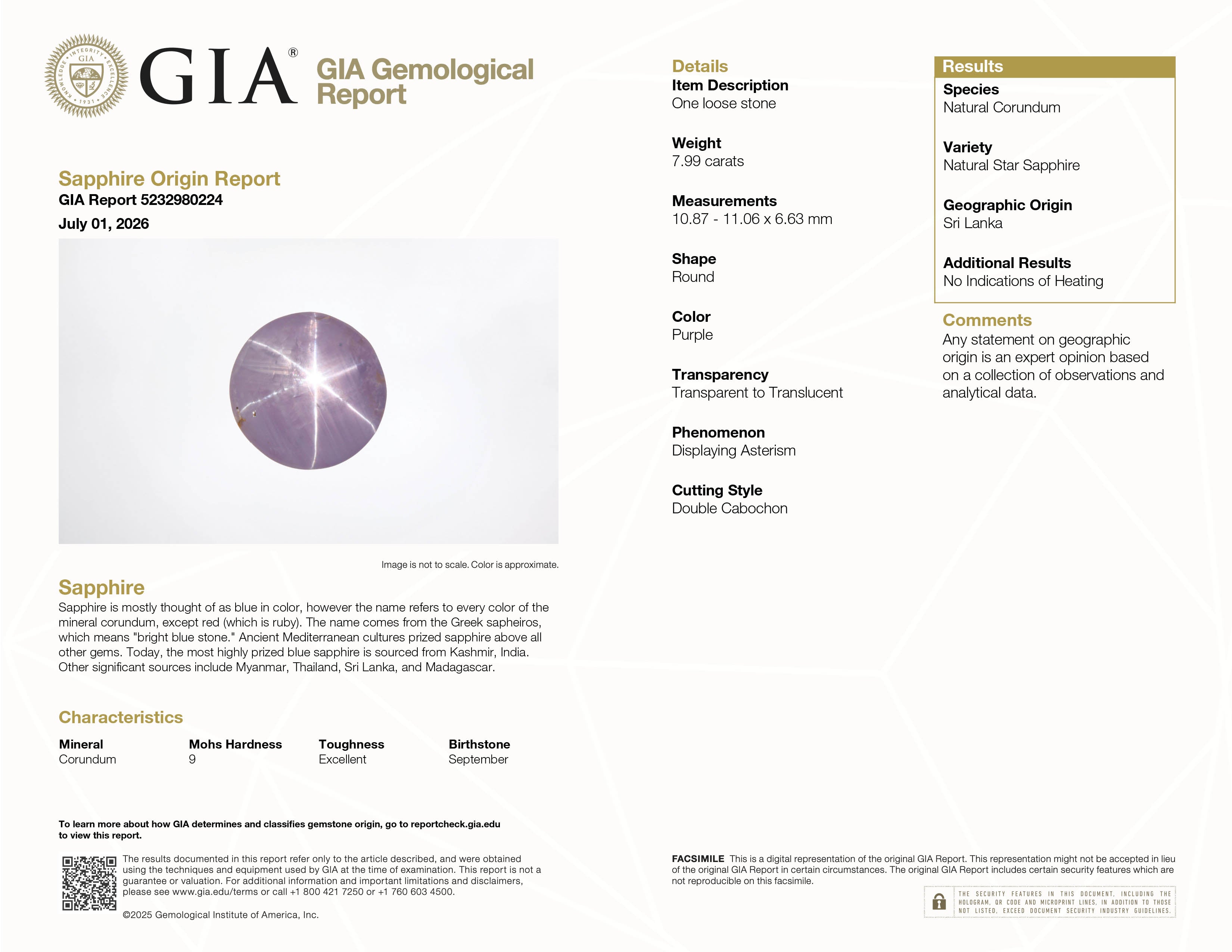
"Purple star sapphire" is the second most-searched star sapphire color on this site after pink — and violet, its close cousin, shows up right alongside it in searches asking which is which. This guide prices both, explains what separates them, and works from two stones currently in stock: a 7.99ct purple and a 3.40ct violet, both unheated and GIA-documented.
Both colors come from the same chromium-plus-iron-and-titanium color mechanism that produces purple and violet in faceted sapphire generally, carried over into star material. Purple star sapphire reads as a true, saturated purple — chromium-forward, warmer than violet. Violet star sapphire sits closer to the blue end of the spectrum, with a cooler, more blue-leaning cast and typically less chromium influence. Neither is a "better" or more valuable color by default; pricing depends on saturation, star sharpness, and transparency within each color, not on purple vs. violet as a category. For the pink position in this same family, see our Pink Star Sapphire Price Guide.
As with every star sapphire color, the six-ray star comes from aligned rutile silk inclusions reflecting light when the stone is cut as a domed cabochon — never faceted. The mechanics are identical across colors; only the body color changes. See our Star Sapphire Buyer's Guide for the full asterism explanation.
| Quality tier | What it looks like | Price per carat |
|---|---|---|
| Commercial | Weak or broken star, pale or grayish purple/violet, mostly opaque | $30–$150 |
| Good | Visible six-ray star, moderate saturation, semi-translucent | $150–$400 |
| Fine, GIA | Sharp star, clean purple or violet body, good translucency, Ceylon origin | $400–$1,500 |
| Exceptional | Razor-sharp star, vivid saturated color, high transparency, larger sizes | $1,500–$6,000+ |
Our current stock: a 7.99ct round cabochon purple star sapphire, GIA-documented and unheated, priced at $3,990 (about $500/ct); and a 3.40ct oval cabochon violet star sapphire, also GIA-documented and unheated, priced at $2,380 (about $700/ct). Both sit in the fine tier — the purple stone's larger size brings its per-carat rate down somewhat, which is typical for star material once a stone clears about 5 carats with a clean star, since large clean star rough is scarcer and commands attention independent of per-carat math.
Under $400 typically means a soft or partial star and muted, grayish color — usable, not investment-grade. $400–$1,500 is where a genuinely sharp star with real purple or violet saturation appears, generally in the 2–5ct range. Above $1,500 per carat, expect GIA documentation, a crisp unbroken star, and enough transparency that the body color reads clearly rather than looking like an opaque cabochon with a star painted on top.
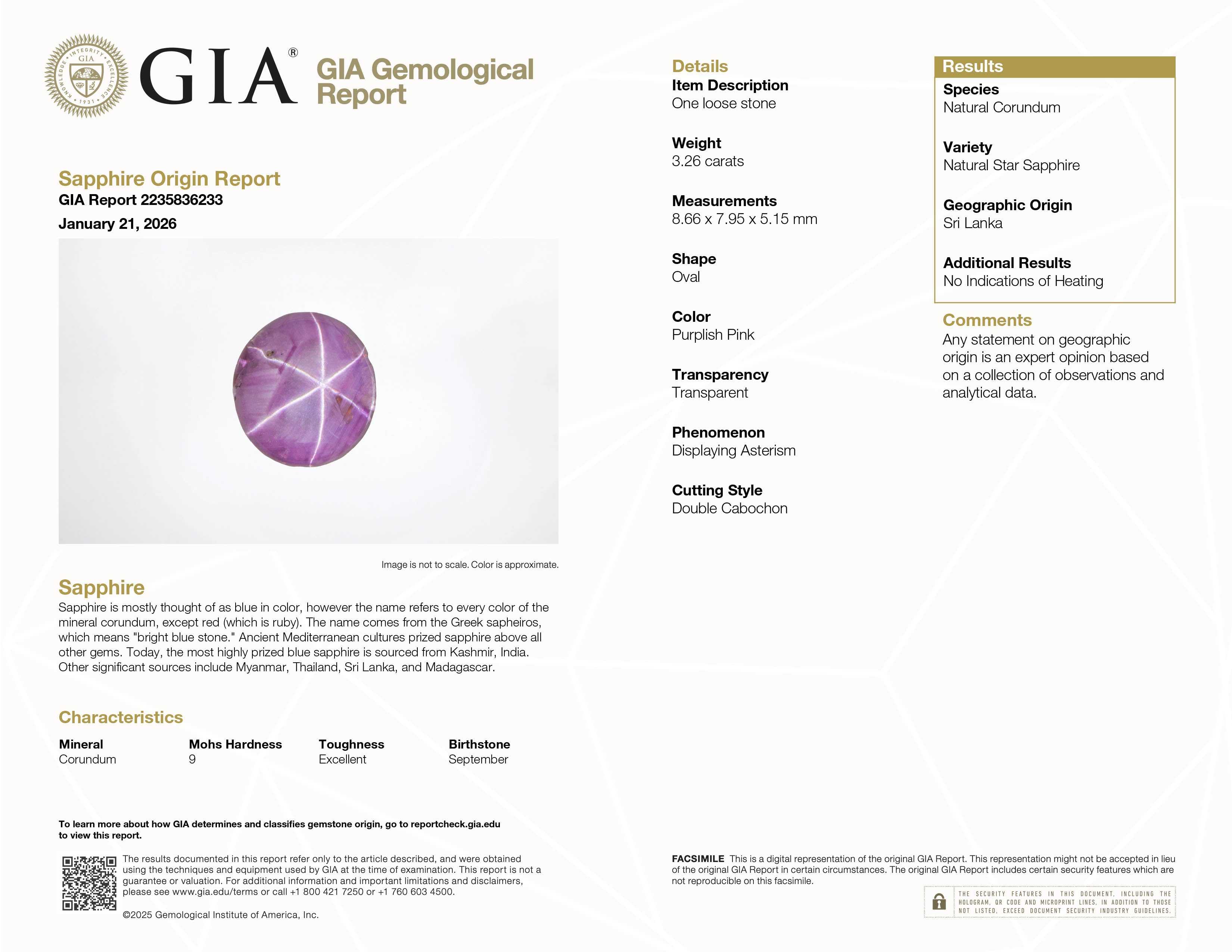
Ceylon (Sri Lanka) is the benchmark origin for fine purple and violet star sapphire, producing the combination of saturated color and sharp asterism that the market pays the most for. Both of our current stones are Ceylon origin with GIA documentation confirming natural origin, unheated status, and star type. For stones represented as natural where a synthetic alternative exists at a much lower price, GIA or equivalent lab confirmation is not optional — see our natural star sapphire identification guide.
Purple star sapphire reads as a warmer, more chromium-forward true purple. Violet star sapphire sits closer to blue, with a cooler cast and typically less chromium influence. Both are natural, distinct color positions in star corundum, graded and priced by the same star-sharpness and saturation criteria rather than one outranking the other.
Fine purple or violet star sapphires with a sharp star and GIA documentation run $400–$1,500 per carat, with exceptional stones reaching $1,500–$6,000+ per carat. Our current 7.99ct GIA-documented purple star sapphire is priced at $3,990 total (about $500/ct); a 3.40ct GIA-documented violet example is $2,380 (about $700/ct).
Purple and violet star material is less commonly seen than blue or grey star sapphire, since it requires both the chromium/iron-titanium chemistry that produces purple color and the rutile silk density needed for a sharp star to coincide in the same crystal. Large stones (5ct+) with a clean unbroken star in saturated purple or violet are genuinely scarce, which is reflected in the pricing above.
Have a question about our purple or violet star sapphires, or want to see options in a specific size or budget? Email crescentgems@gmail.com — we respond within one business day. Free US shipping; 14-day returns on every order.


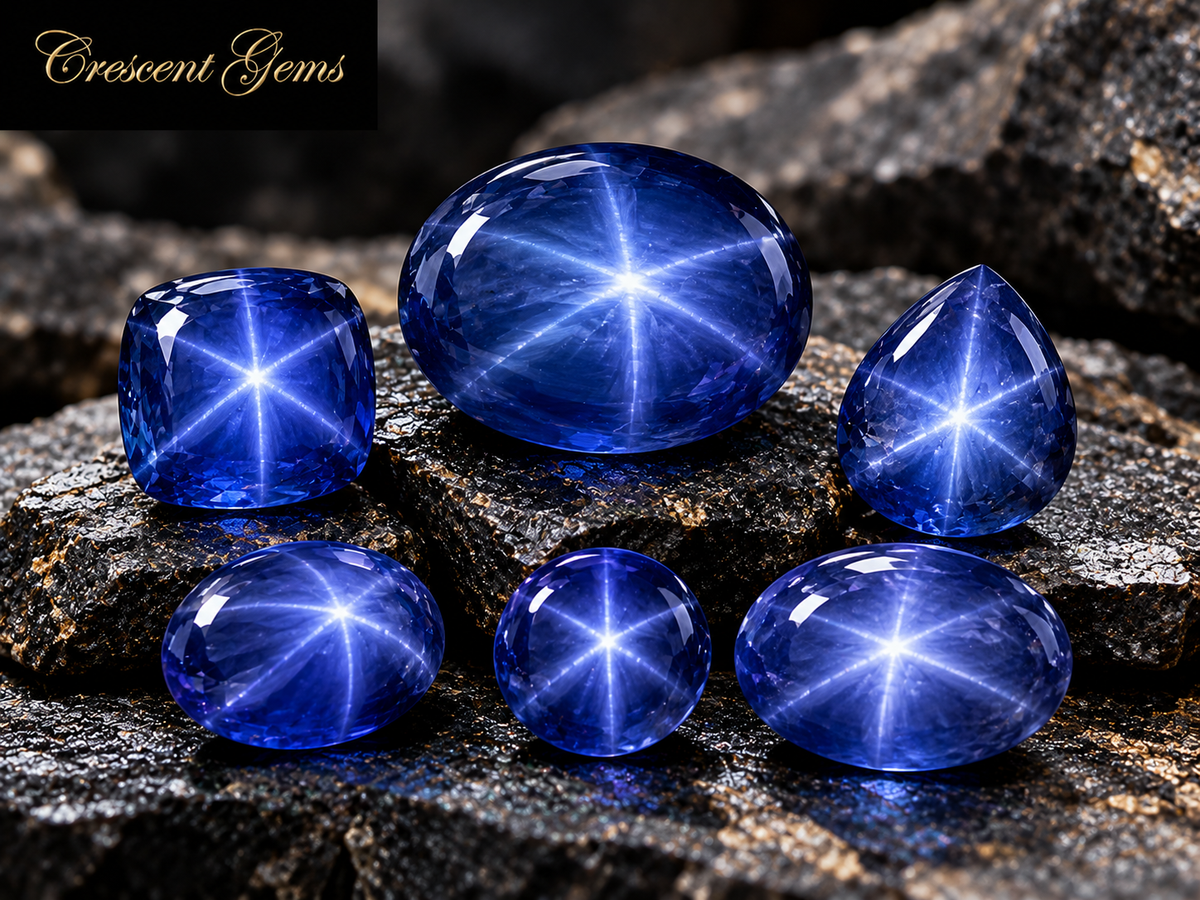
Blauer Sternsaphir: Preise pro Karat und wovon sie abhängen
Was blauer Sternsaphir pro Karat kostet und wovon der Preis abhängt – dazu unser einziger Stein: 8,09 ct für 4.040 $ mit GIA Sapphire Origin Report.
Weiterlesenüber Blauer Sternsaphir: Preise pro Karat und wovon sie abhängen
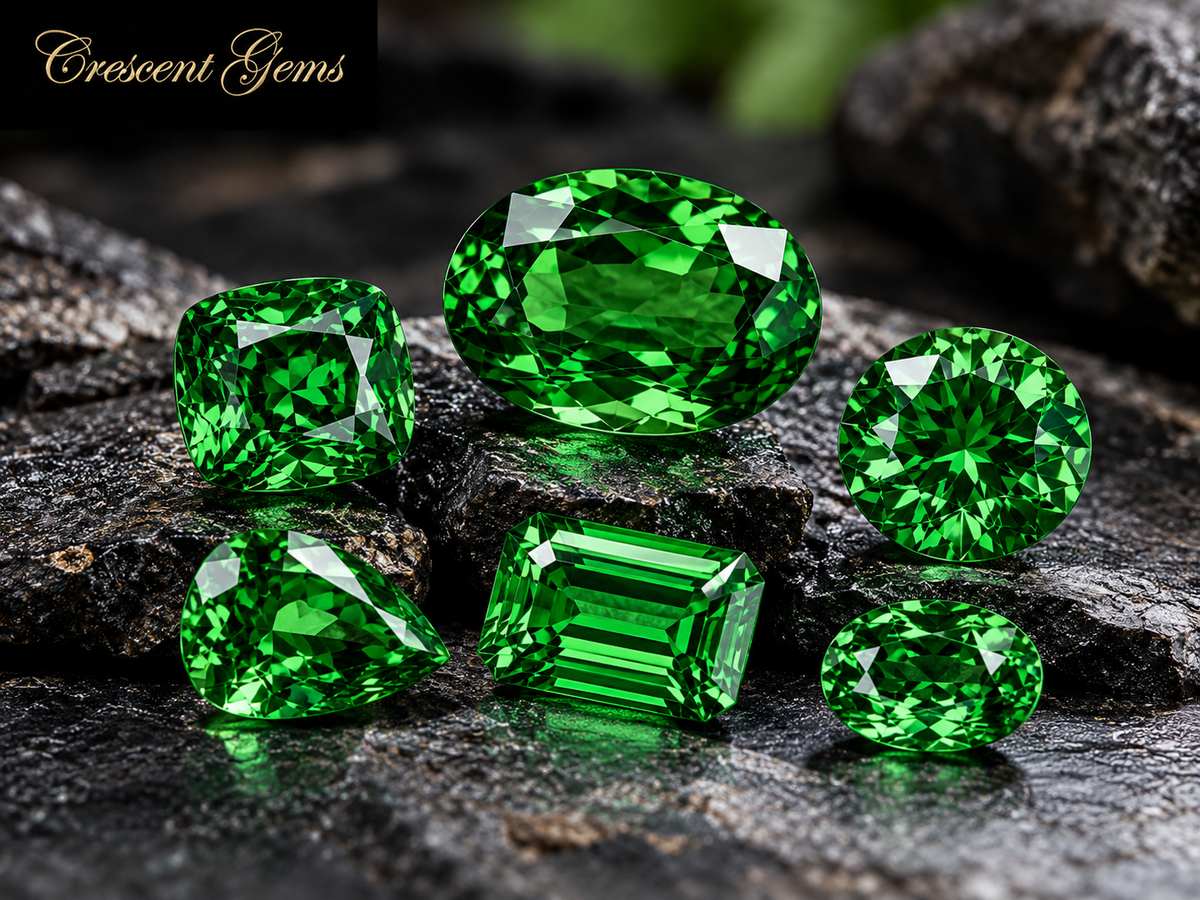
Tsavorit-Granat: Preise pro Karat aus unserem eigenen Bestand
Was Tsavorit-Granat kostet: die Preise pro Karat unserer sieben Steine, der Unterschied zwischen Varietät und Spezies und warum sauberer Rohstein knapp ist.
Weiterlesenüber Tsavorit-Granat: Preise pro Karat aus unserem eigenen Bestand
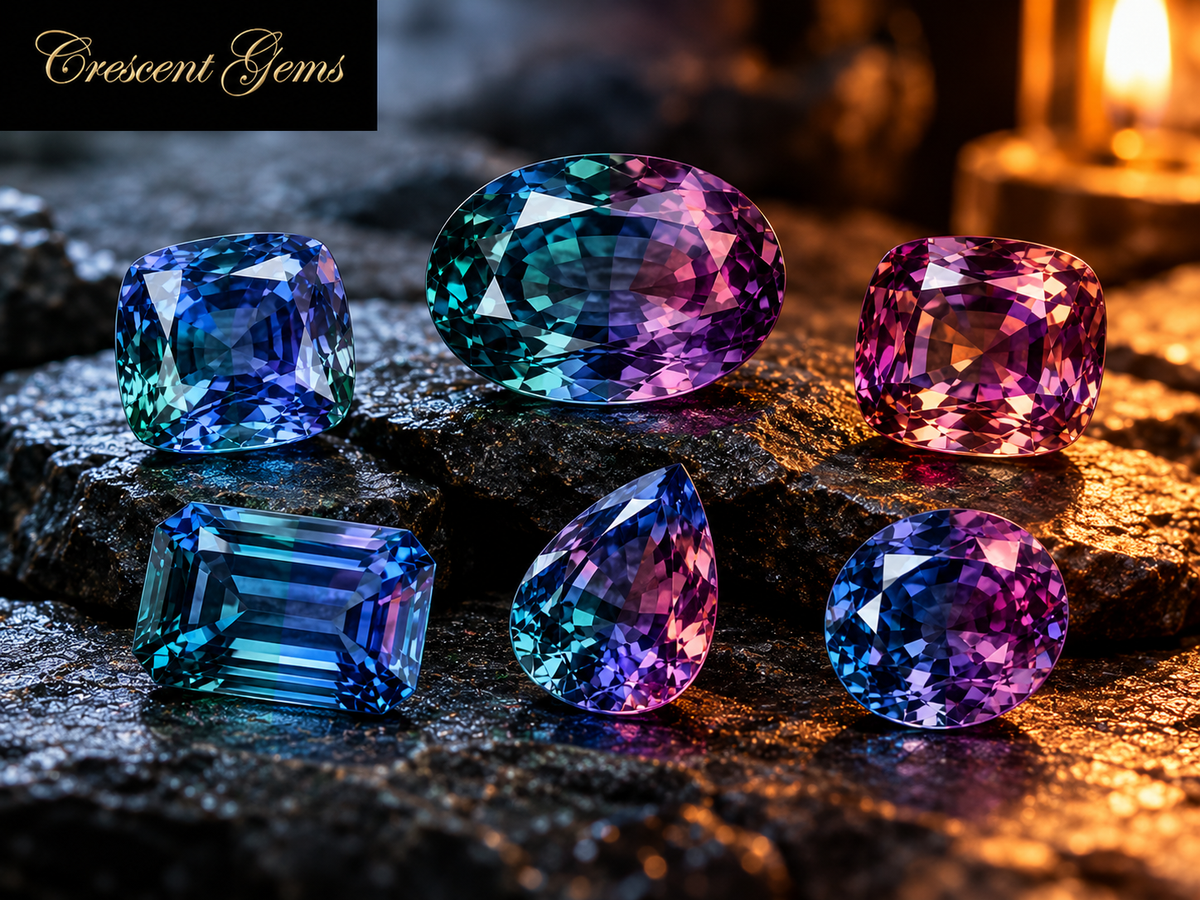
Farbwechsel-Saphir: was er pro Karat kostet und warum
Was ein Farbwechsel-Saphir pro Karat kostet und wovon der Preis abhängt – dazu unsere beiden Steine: 1,03 ct für 824 $ und 2,01 ct für 2.211 $.
Weiterlesenüber Farbwechsel-Saphir: was er pro Karat kostet und warum
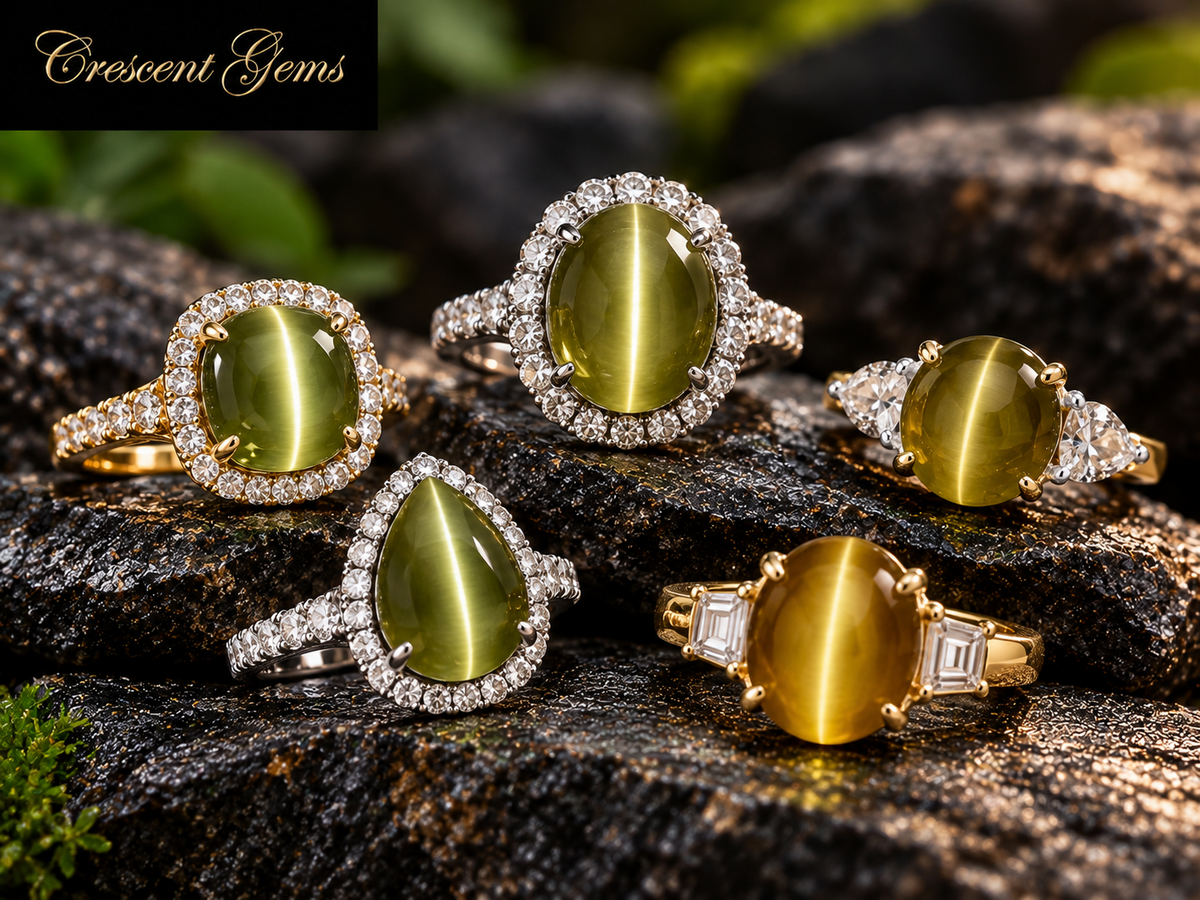
Chrysoberyll-Katzenauge im Verlobungsring: Eignet es sich?
Chrysoberyll hat Mohshärte 8,5 – über Quarz (7) und Smaragd (7,5–8), unter Korund (9) und Diamant (10). Was das für Alltag, Fassung und Pflege bedeutet.
Weiterlesenüber Chrysoberyll-Katzenauge im Verlobungsring: Eignet es sich?
Cat's Eye Chrysoberyl Price Guide — What They Cost and Why
Weiterlesenüber Cat's Eye Chrysoberyl Price Guide — What They Cost and Why