Natural Sapphire & Gemstone Buying Guides

Is Tsavorite Good for an Engagement Ring? Durability, Color, and What Buyers Need to Know

Is Tsavorite Good for an Engagement Ring? Durability, Color, and What Buyers Need to Know

Is tsavorite good for an engagement ring? What the report records, why toughness rather than hardness is the question, the settings that protect the edges, and how to care for a garnet.
Read moreabout Is Tsavorite Good for an Engagement Ring? Durability, Color, and What Buyers Need to Know

How to Care for a Sapphire Engagement Ring: Cleaning, Storage, and What to Avoid
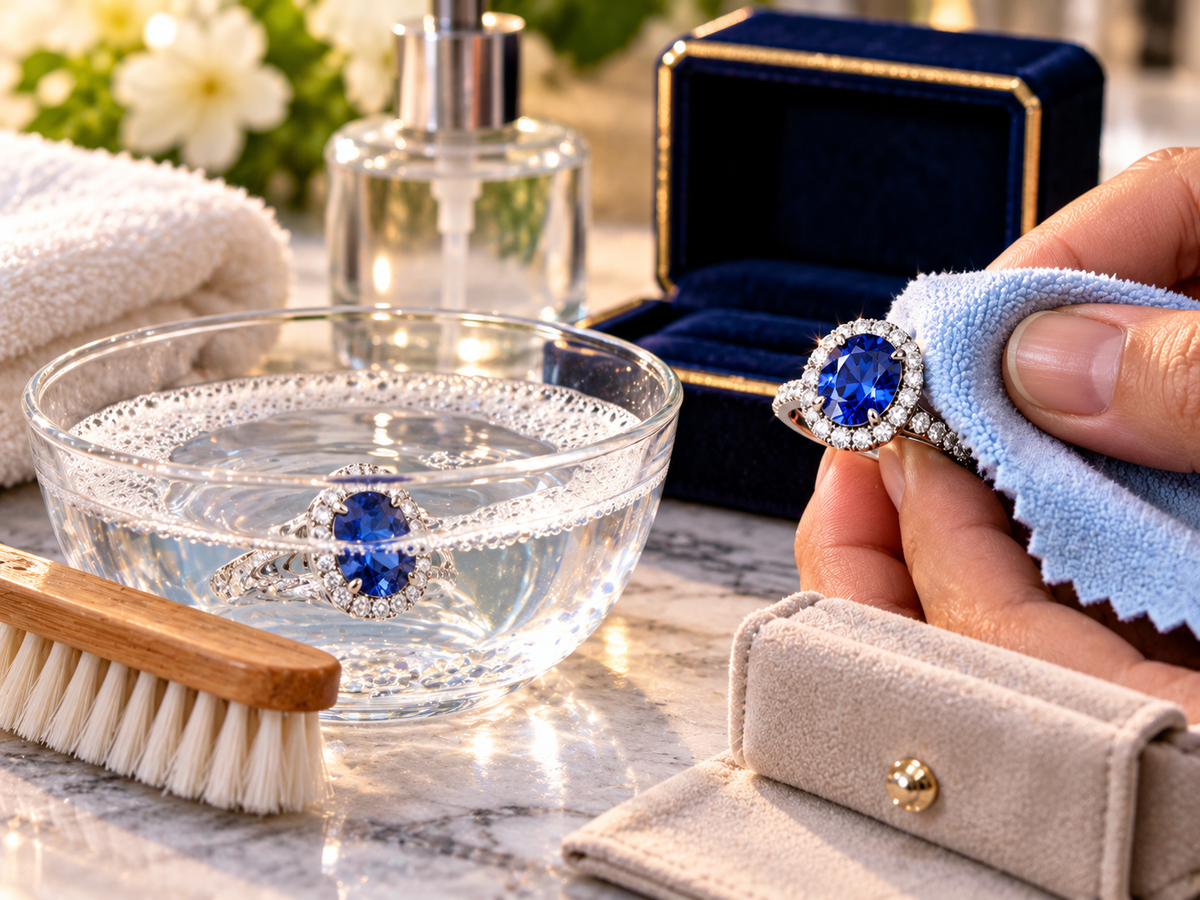
How to Care for a Sapphire Engagement Ring: Cleaning, Storage, and What to Avoid

How to care for a sapphire engagement ring: the cleaning method we use, ultrasonic and steam cleaning guidance, what chemicals and activities to avoid, storage rules, when to have the setting checked, and care by setting type.

Read moreabout How to Care for a Sapphire Engagement Ring: Cleaning, Storage, and What to Avoid

What Is a GIA Sapphire Report and How Do You Read One?
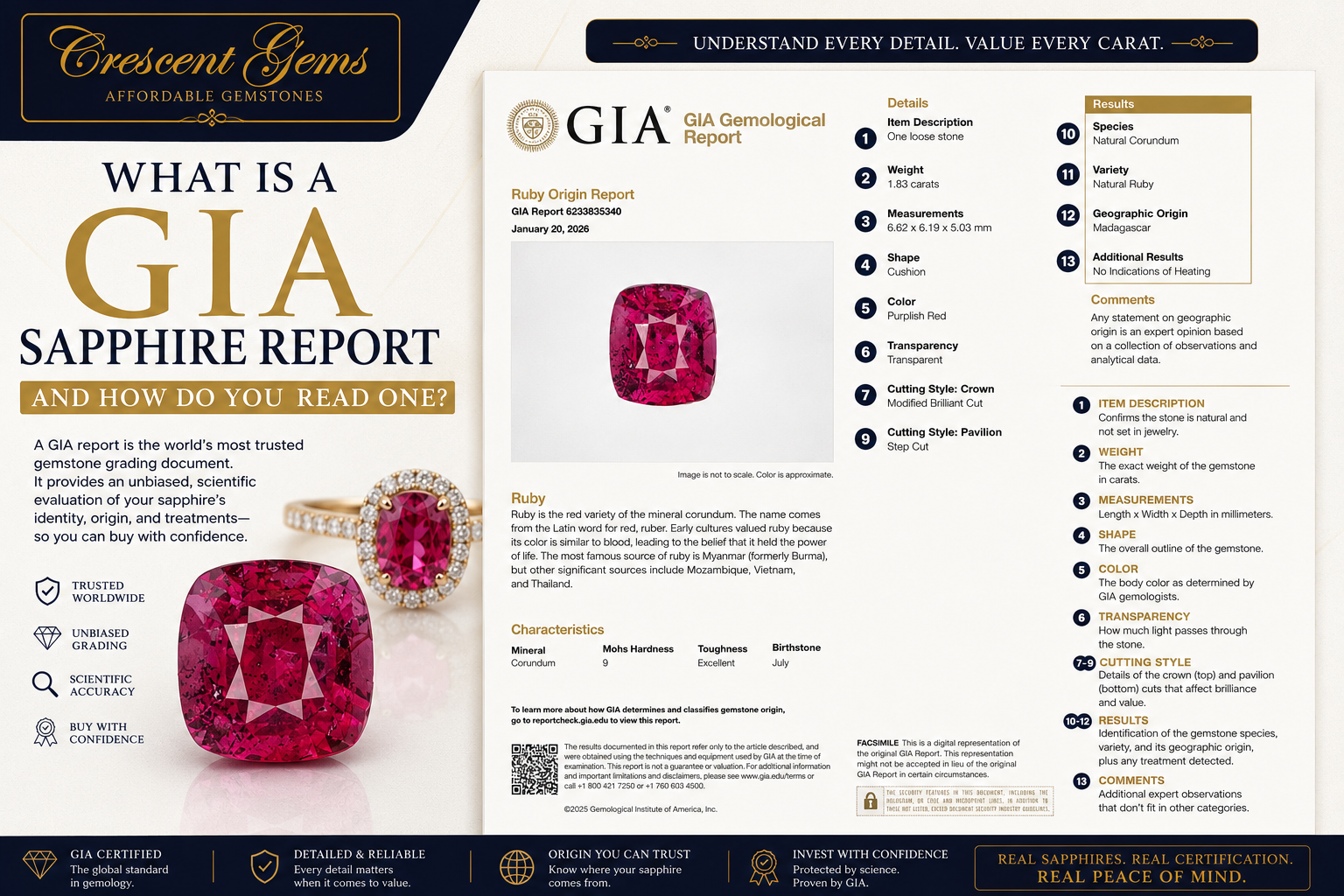
What Is a GIA Sapphire Report and How Do You Read One?

A complete guide to GIA sapphire reports: what every section means, how to read the treatment and origin fields, how GIA compares to Gübelin and SSEF, and when you actually need one.

Read moreabout What Is a GIA Sapphire Report and How Do You Read One?

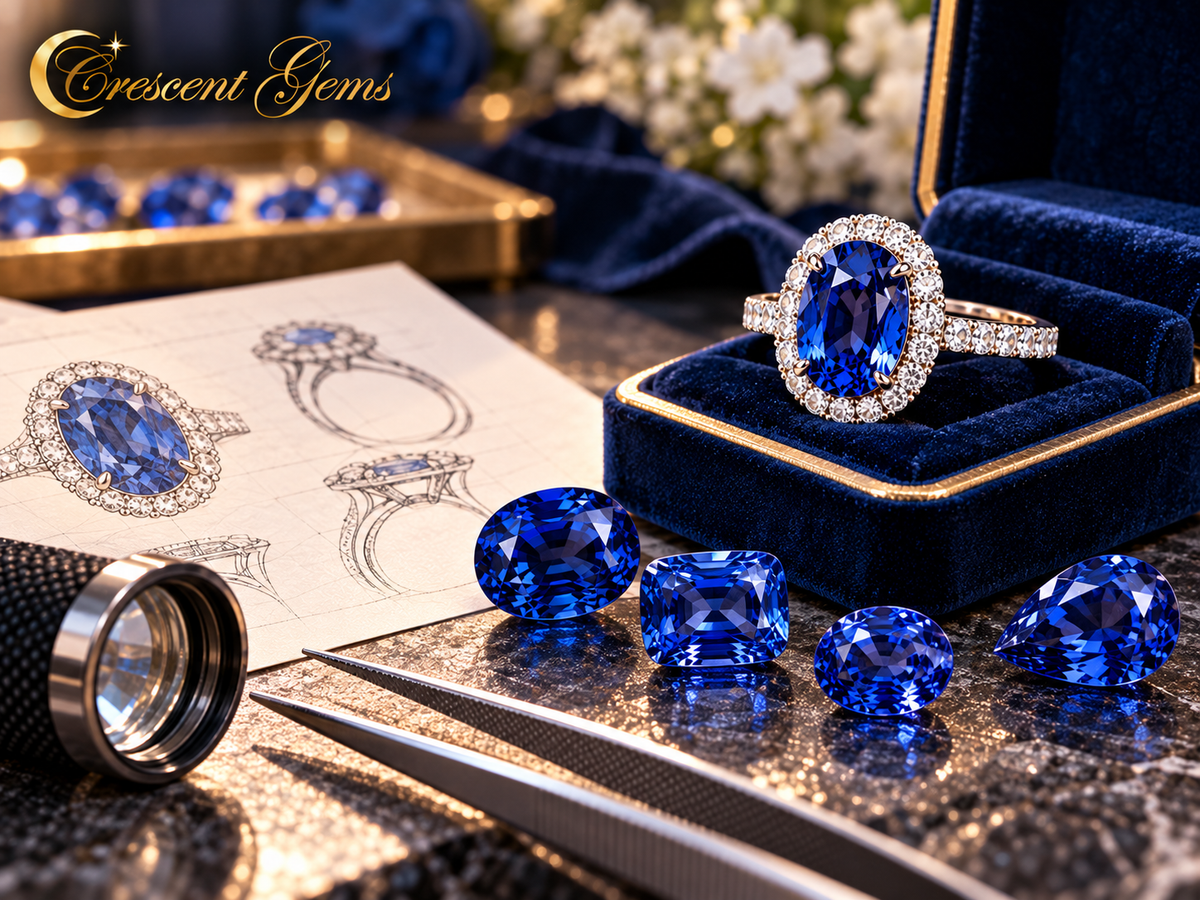
An oval blue sapphire halo engagement ring in a velvet box, beside loose blue sapphires, ring design sketches, tweezers and a loupe.

Blue Sapphire Engagement Ring Guide: Color, Origin, Treatment and Setting
Blue sapphire engagement ring guide — color, origin, heat treatment, laboratory reports, clarity, cut and shape, setting styles, and how to find out what your budget buys.

Read moreabout Blue Sapphire Engagement Ring Guide: Color, Origin, Treatment and Setting

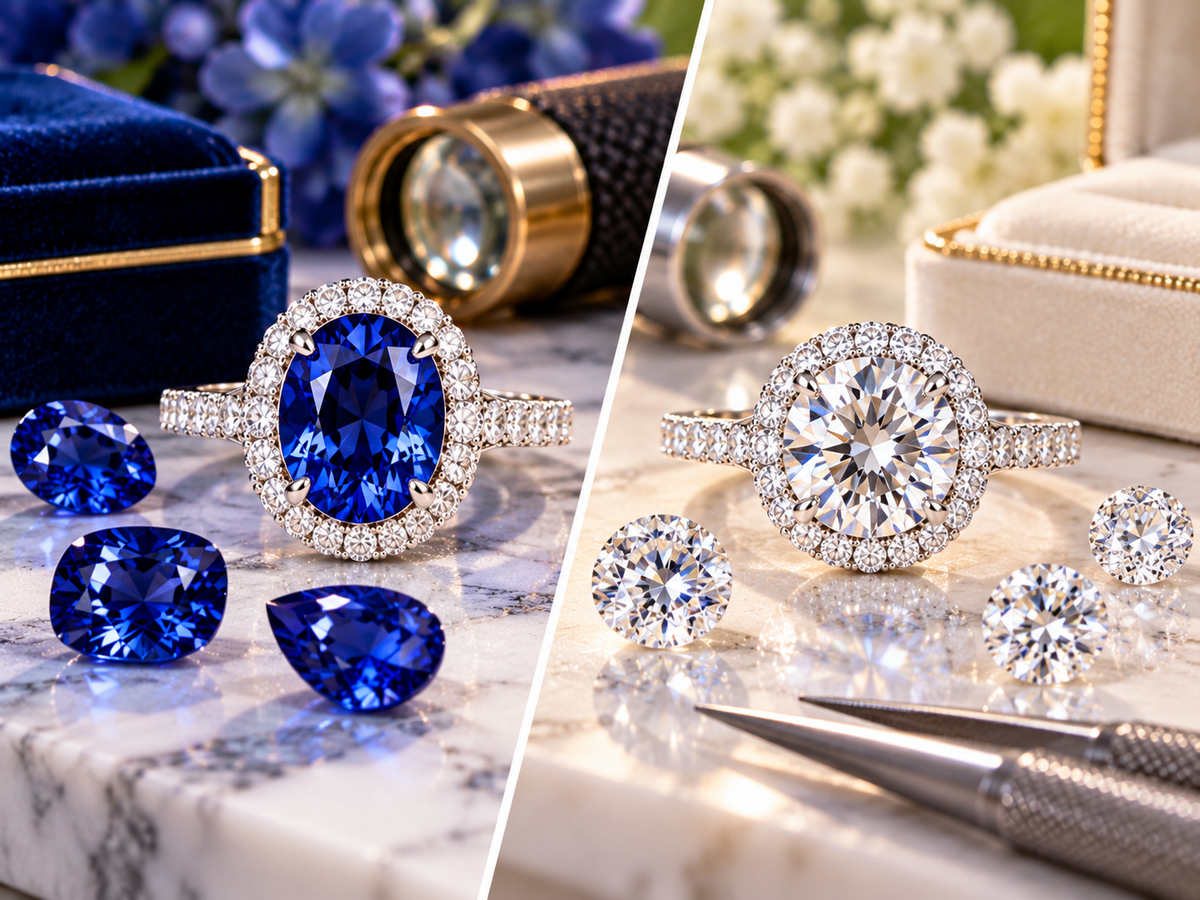
A loose blue sapphire and a round brilliant diamond side by side on a neutral surface, with a laboratory report and a loupe beside them.

Sapphire vs. Diamond Engagement Rings: The Real Differences, and How to Choose the Right Sapphire

Sapphire vs. diamond engagement rings: what the Mohs numbers do and do not settle, why no laboratory grades a sapphire's color, clarity or cut, and what to look at instead when choosing one.

Read moreabout Sapphire vs. Diamond Engagement Rings: The Real Differences, and How to Choose the Right Sapphire

Sapphire colors explained

Sapphire Colors Explained — Every Color, What Causes It, and How to Choose

Sapphire occurs in virtually every color — blue, teal, yellow, pink, peach, padparadscha, purple, violet, orange, green, white, and color-change. This guide explains every sapphire color, what trace element causes it, what it looks like, and how to find the right one for you.

Read moreabout Sapphire Colors Explained — Every Color, What Causes It, and How to Choose

What Sapphire Color Looks Best for Your Skin Tone? A Practical Guide
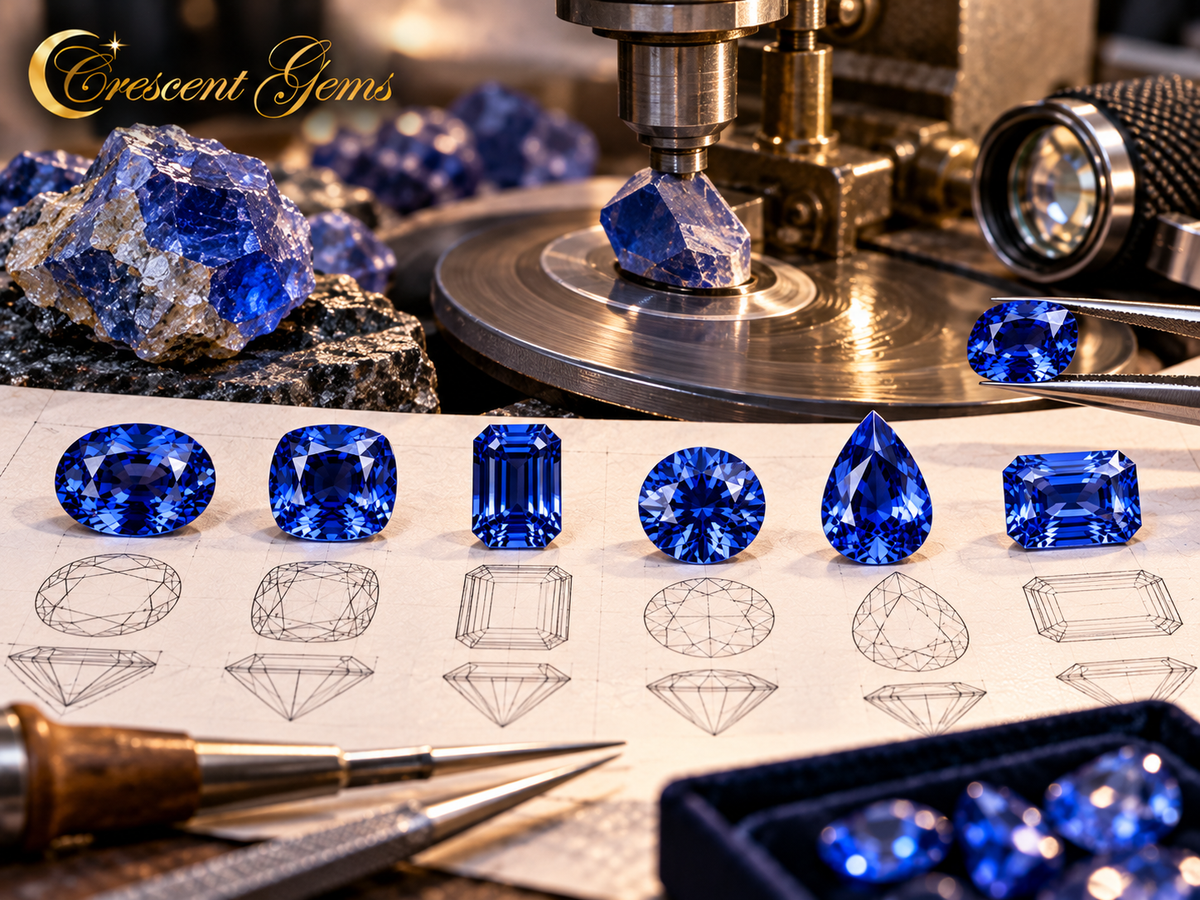
What Sapphire Color Looks Best for Your Skin Tone? A Practical Guide

The right sapphire color for your skin tone depends on the interaction between the stone's hue, your skin's undertone, and your setting metal. This practical guide breaks down which sapphire colors flatter which skin tones — and why the rules are more flexible than most guides suggest.

Read moreabout What Sapphire Color Looks Best for Your Skin Tone? A Practical Guide

How Cut Affects a Sapphire — And Why It Matters More Than Most Buyers Realize
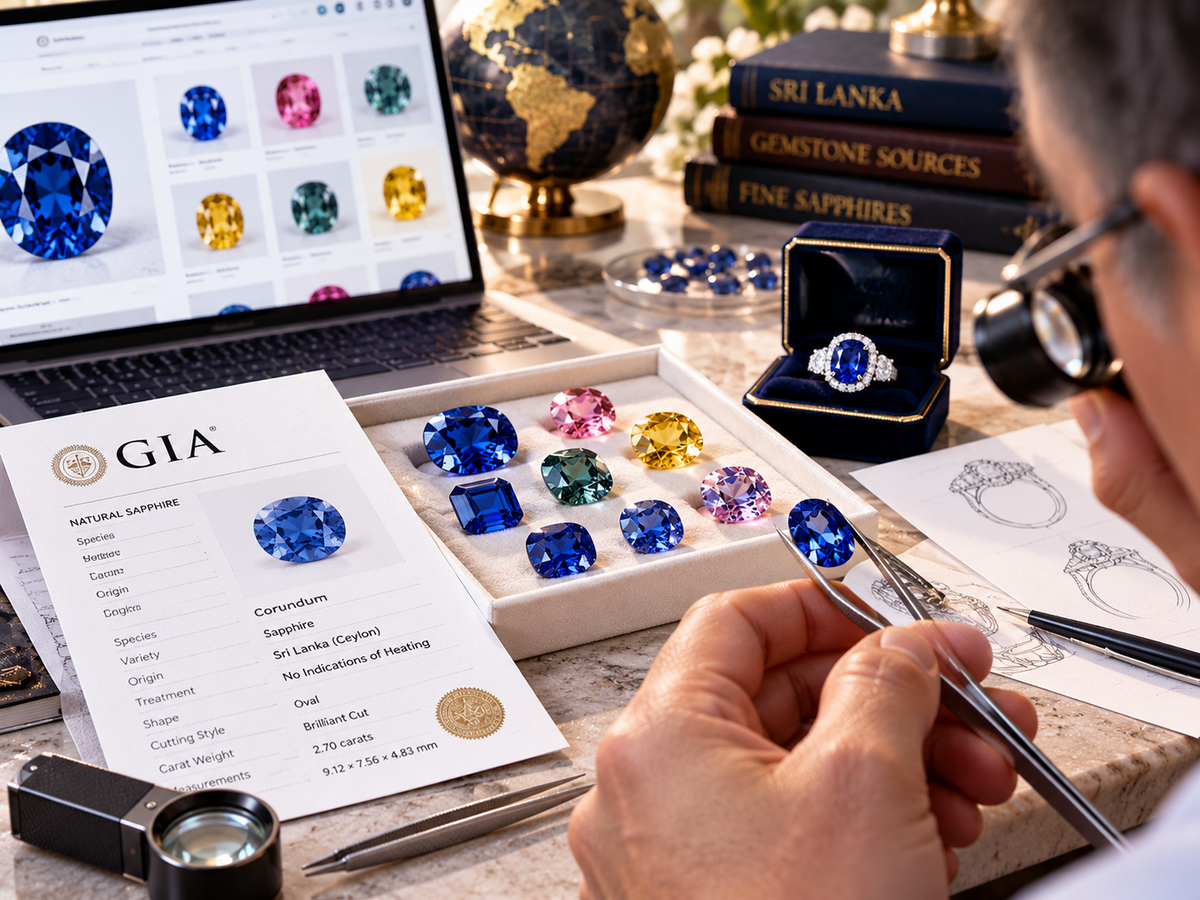
How Cut Affects a Sapphire — And Why It Matters More Than Most Buyers Realize

Cut is the most underestimated quality factor in sapphire buying. A poorly cut sapphire can look dull, pale, and lifeless regardless of how fine its rough was — while a well-cut stone extracts maximum color and brilliance from material that might seem ordinary. This guide explains exactly how cut affects sapphire color, brilliance, and value.

Read moreabout How Cut Affects a Sapphire — And Why It Matters More Than Most Buyers Realize

A buyer examining loose sapphires with tweezers and a loupe, beside a laboratory report, a seller’s listings open on a laptop, and ring design sketches.

How to Tell If a Loose Sapphire Seller Is Reputable
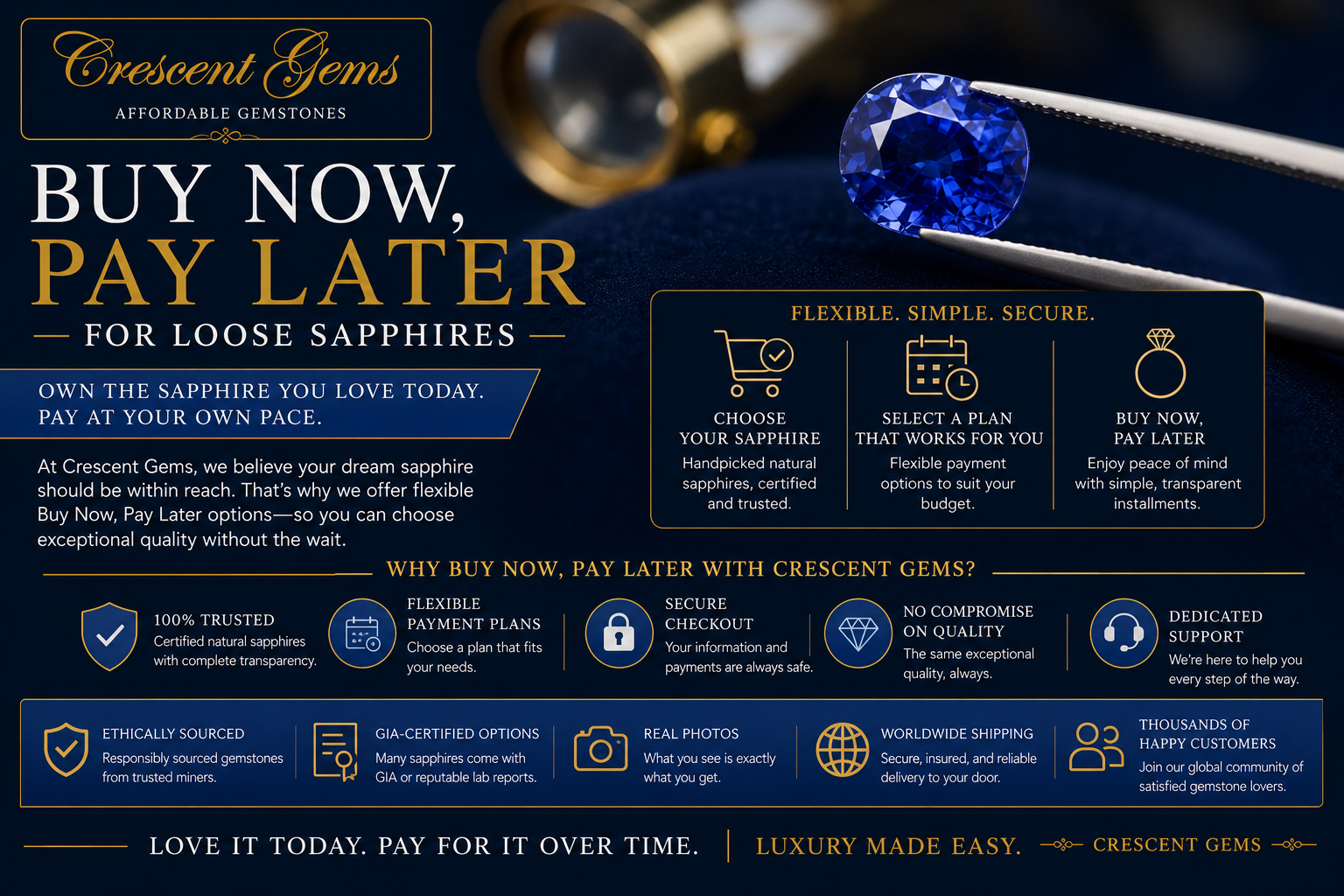
Choosing a loose sapphire seller comes down to what you can get a straight answer about: treatment status, laboratory documentation, photographs and returns. Here are nine questions to put to anyone selling you a sapphire, what a useful answer looks like, and our own answers to the same nine.

Read moreabout How to Tell If a Loose Sapphire Seller Is Reputable

Buy Now, Pay Later for Loose Sapphires

Buy Now, Pay Later for Loose Sapphires: How Financing Works at Crescent Gems
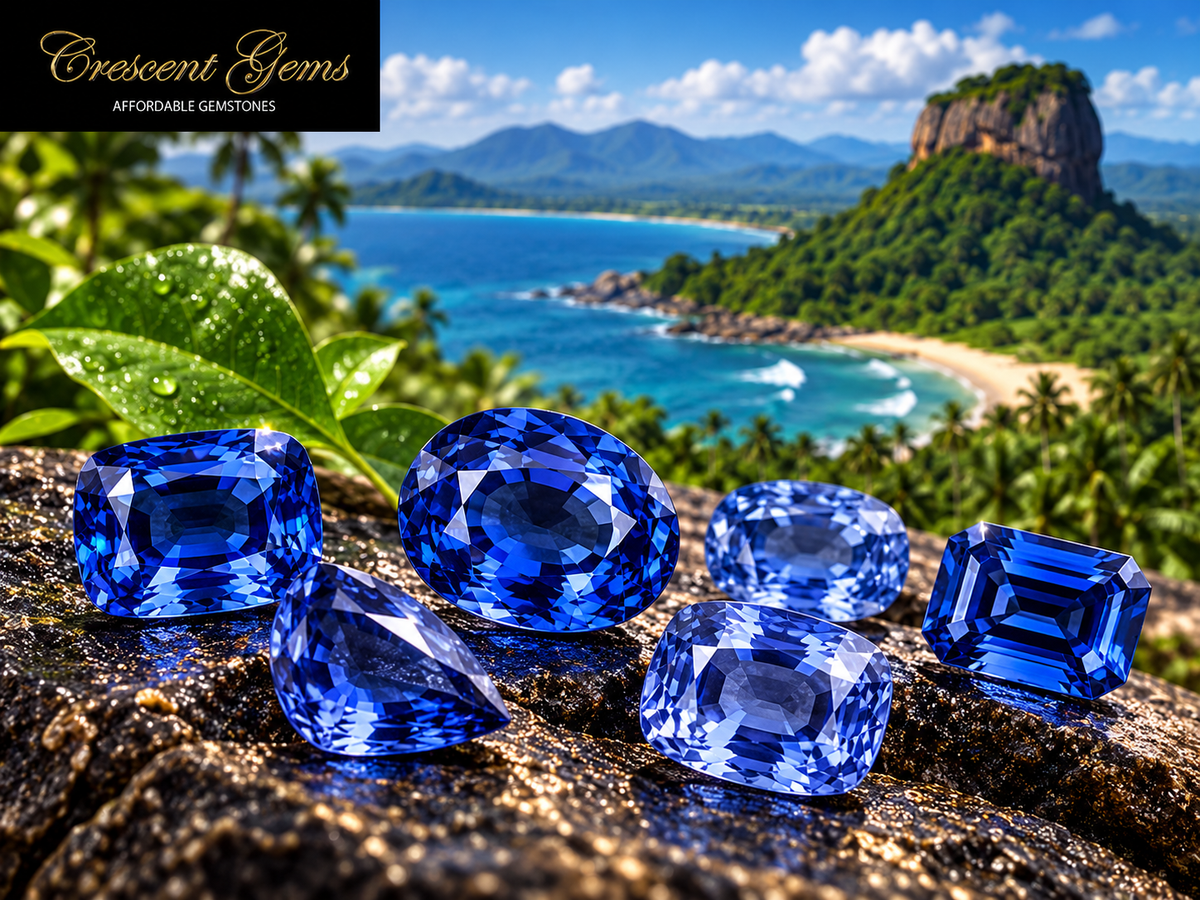
Crescent Gems now offers Buy Now Pay Later through Shop Pay Installments, powered by Affirm. Split your loose sapphire purchase into interest-free bi-weekly payments or monthly installments up to 24 months — so the stone you want does not have to wait for the budget you are building toward.

Read moreabout Buy Now, Pay Later for Loose Sapphires: How Financing Works at Crescent Gems

Ceylon sapphires

Ceylon Sapphire: The Complete Guide to the World's Most Trusted Sapphire Origin

Ceylon has been one of the world's most important sapphire-producing origins for more than two thousand years. This complete guide covers the geology, history, color range, why the Ceylon designation carries a market premium, how GIA forms an origin opinion, and what buying directly from Sri Lanka means for quality and price.

Read moreabout Ceylon Sapphire: The Complete Guide to the World's Most Trusted Sapphire Origin

Cat's eye chrysoberyl oval cabochon showing a single sharp chatoyant band across the dome

Cat's Eye Chrysoberyl Buyer's Guide — Chatoyancy, Body Color, Origin and Jyotish Lahsuniya

Cat's eye chrysoberyl (cymophane) is the stone the trade means when it says "cat's eye" without naming a species — displaying a single mobile band of light (the cat's eye) caused by parallel fibrous inclusions aligned within the crystal. This guide covers the gemology of chrysoberyl, the three conditions required for chatoyancy, what buyers look at in the eye and the body color and why no laboratory grades any of it, how the producing origins differ, the Jyotish Lahsuniya dimension, imitations and synthetics to rule out, settings, and what a GIA report does and does not say.

Read moreabout Cat's Eye Chrysoberyl Buyer's Guide — Chatoyancy, Body Color, Origin and Jyotish Lahsuniya

Why Buy from Crescent Gems


Choosing a gemstone for an engagement ring or important piece of jewellery is a deeply personal decision. It is often a meaningful purchase made only a few times in a lifetime, so trust, accurate information and expert guidance matter. Crescent Gems combines more than 25 years of gemstone experience with direct sourcing, careful cutting and transparent treatment disclosure to help you choose with confidence

Natural, earth-mined gemstones only

Direct sourcing from leading mining regions

No synthetic, flux-filled or beryllium-diffused stones

In-house cutting and recutting

Actual photographs, hand videos and 360-degree views

14-day returns

GIA reports for significant gemstones

Join our ever growing group of satisfied customers from around the world.