- by Ahmed Shareek
Padparadscha Sapphire Price Guide — What Drives the Price
- by Ahmed Shareek
Padparadscha Sapphire Price Guide - For the complete padparadscha overview: Padparadscha Sapphire — The Complete Guide. For general sapphire pricing: 1 Carat Ceylon Sapphire Price Guide. For the buying foundation: Ultimate Sapphire Buying Guide.
Padparadscha sapphire is a laboratory designation for a narrow band of pink-orange corundum, and its price is set less by the name than by what stands behind it. Two stones offered under the same word can differ in what a laboratory has said about the colour, in what the same report says about heating, in whether the colour has passed a stability test, and in size, clarity and cut. This guide quotes no price figures. It explains each of those factors, where it appears on a report, and why it moves the price — so that a quotation can be read against the stone it belongs to.
The padparadscha market is also confusing to navigate, because the name is used loosely to describe a range of orange-pink stones — many of which a laboratory would not call padparadscha, and some of which are priced as though one had. This guide explains what padparadscha actually is, what drives its price, and how to read a report before comparing two stones.
Padparadscha is not simply any orange-pink sapphire. The name — from the Sinhalese word for the lotus blossom — describes a specific colour range in corundum. LMHC Information Sheet #4, the shared report wording of the Laboratory Manual Harmonisation Committee, sets it out as a subtle pinkish orange to orangey pink, with "pastel tones and low to medium saturation", judged in standard daylight. Both hues belong to it: the sheet withholds the name if the stone has any colour modifier other than pink or orange, or major uneven colour distribution visible to the unaided eye. A stone that reads simply pink, or simply orange, falls outside the range.
Critically, padparadscha is a laboratory designation, not a color description that can be verified by eye alone. GIA, Gübelin and SSEF are among the seven member laboratories of the LMHC. GIA states that it "indicates on a Colored Stone Identification & Origin Report when a sapphire, in our opinion, meets the criteria to be described as padparadscha." A seller's verbal claim that a stone is padparadscha, without laboratory documentation, is unverifiable.
Padparadscha sapphires are offered both unheated and heated, because the name is a colour call, not a treatment call, and it is important not to confuse the two. LMHC Information Sheet #4 defines padparadscha by colour. The sheet withholds the name for lattice diffusion, glass-filled fissures, irradiation, dyeing, coating and unstable colour — but it states plainly that the name "shall be applied to both unheated and heated ‘padparadscha sapphire’". Ordinary heat is not an exclusion.
Two further lines on the sheet bear directly on price. The first is colour stability: "For any corundum of padparadscha-like colour, a colour stability test is mandatory." If the colour shifts out of the padparadscha range, the sheet says the stone is identified either as pink sapphire or fancy sapphire instead. A passed test means no such shift was observed under the test conditions; it is not a promise about the future. The second is treatment: because the name covers heated and unheated stones alike, treatment status comes from the treatment line on the laboratory report, or from the seller’s written disclosure — never from the name itself.
Several separate factors set the price of a stone sold as padparadscha, and none of them is the word itself:
The laboratory colour call. The first question is whether a laboratory has described the stone as padparadscha at all. A stone with that designation on its report and a pink-orange stone without one are different goods, even when they look alike in a photograph, and they are priced as different goods. Within the range, where the colour sits — how evenly the pink and orange are balanced, how light or deep the pastel tone, how saturated — is what buyers compare from stone to stone. The report records the laboratory's call; it does not rank one padparadscha against another.
The treatment line. The same report states, separately, whether the laboratory found indications of heating. "No indications of heating" is a finding about heating and only about heating; it is not a statement that no other treatment has ever been applied, which is why LMHC's separate exclusions for diffusion, filling and irradiation matter as well. Heated stones in the padparadscha colour range exist, carry the name under LMHC wording, and are priced as a different category from unheated ones. So padparadscha pricing is really two questions stacked on top of each other: does the laboratory call the colour padparadscha, and what does the same report say about heating? Compare like with like — a heated stone against heated stones, an unheated stone against unheated ones.
Origin, read as an opinion. LMHC defines padparadscha as corundum "from any geographical origin", so the designation does not depend on where the stone was mined. Where a report also carries an origin line, it is a separate statement, and laboratories describe it as an opinion. GIA, writing in Gems & Gemology, puts it plainly: geographic origin determinations on reports are "opinions—they are not indisputable facts." SSEF states the same in one line: "Origin determination is an expert opinion." A seller may price an origin line, but it should be read as the laboratory's opinion, and a buyer should check whether the report in hand carries one at all.
| Report line or situation | What it means | What it means for price |
|---|---|---|
| No laboratory report | The name is the seller's word only | Compare it with other pink-orange sapphires, not with documented padparadscha |
| Colour described as "pinkish orange" or "orangy pink", no designation | A colour description, not the padparadscha designation | Priced as a pink-orange sapphire; the description alone does not carry the name |
| Padparadscha, with "No indications of heating" | The laboratory's colour call, plus a finding about heating | Compare with other padparadscha carrying the same treatment line |
| Padparadscha, with "Indications of heating" | The name applies; LMHC wording covers heated stones | A different category from unheated stones; compare heated with heated |
| Lattice diffusion, glass filling, irradiation, dye or coating | LMHC withholds the name | Not a padparadscha; priced as the treated stone it is |
| Colour shifts out of range in the stability test | Identified as pink sapphire or fancy sapphire | Priced as a pink or fancy sapphire |
This table describes report lines and how each enters a price. It contains no price figures and is not a valuation.
A few important clarifications on these lines:
Weight is the most visible number on a quotation, but it is one factor among several. Prices are usually quoted by weight, and the rate by weight is set for the size of the stone rather than fixed across sizes, so a stone twice the weight is not simply twice the price of a smaller one. The factors below are read from the stone and its report together:
| Factor | What to check | Why it enters the price |
|---|---|---|
| Carat weight | The weight printed on the report matches the stone | The rate by weight is set for the size |
| Dimensions | Millimetre measurements, not weight alone | Two stones of equal weight can face up at different sizes |
| Clarity | Whether the stone is eye-clean in photos and video | Visible inclusions change how the colour reads face-up |
| Cut | Windowing, extinction and balanced proportions | A window or dark areas reduce how much of the stone shows colour |
| Colour evenness | Zoning visible face-up | LMHC withholds the name for major uneven colour distribution |
This table lists what to check and why. It contains no price figures and is not a valuation.
For the same reason, a quotation for a larger stone should be compared with other quotations at that size, not scaled up from a smaller one. Above all, check that the report in hand belongs to the stone in hand: the weight and dimensions printed on the report should match the stone you are being offered.
GIA states that it indicates on a Colored Stone Identification & Origin Report when, in its opinion, a sapphire meets the criteria to be described as padparadscha. The lines to read:
For a full guide to reading the GIA report, see our GIA sapphire report guide.
This guide publishes no price bands, because a band cannot tell you which of the factors above a given stone carries. What decides whether a quotation fits a budget is the combination of lines on the report and the stone in front of you. Before comparing any two quotations, ask for:
Two quotations are comparable only when those lines match. A lower price on a stone without the designation, or with a different treatment line, is a price for a different stone.
Because the word covers stones that differ in what matters to price. The first question is whether a laboratory has described the stone as padparadscha at all. The second is the treatment line on the same report: LMHC Information Sheet #4 applies the name to heated and unheated stones alike, and the two are priced as different categories. After that come colour stability (a stone whose colour shifts out of range under the mandatory test is identified as pink or fancy sapphire instead), the balance, tone and evenness of the colour, size, clarity and cut, and any origin line, which is the laboratory's opinion.
No. Padparadscha is a colour, not a treatment status. LMHC Information Sheet #4 withholds the name for lattice diffusion, glass filling, irradiation, dyeing and coating, and states that the name applies to both unheated and heated padparadscha. Read the treatment line on the laboratory report, or ask the seller to disclose it in writing — the name alone tells you nothing about heat.
You need a laboratory report that describes the stone as padparadscha. GIA states that it indicates this on a Colored Stone Identification & Origin Report when, in its opinion, a sapphire meets the criteria; GIA, Gübelin and SSEF are all members of the LMHC, whose Information Sheet #4 sets out the shared wording. A report that only describes the colour as "pinkish orange" or "orangy pink" describes a colour, not the designation. Read the treatment line separately. Without laboratory documentation, any stone called padparadscha by a seller is an unverified claim. See our GIA report guide.
The same lines as on any other: whether a laboratory report names padparadscha or only describes a pink-orange colour; what the treatment line says, since LMHC withholds the name for lattice diffusion, glass filling and irradiation and applies it to heated stones as well as unheated ones; and whether the weight and dimensions on the report match the stone. A difference in price should be traced to a difference in one of those lines, and the stone compared with stones that share them.
We hold no padparadscha in stock at present. If you are looking for one, email crescentgems@gmail.com with your budget and size preference and we will tell you honestly what is findable at that level — including what the treatment line on the report is likely to say. We respond within one business day.

Blue Star Sapphire Price Guide — What They Cost and Why
Read moreabout Blue Star Sapphire Price Guide — What They Cost and Why
Tsavorite Garnet Price Guide — What They Cost and Why
Read moreabout Tsavorite Garnet Price Guide — What They Cost and Why
Color-Change Sapphire Price Guide — What They Cost and Why
Read moreabout Color-Change Sapphire Price Guide — What They Cost and Why
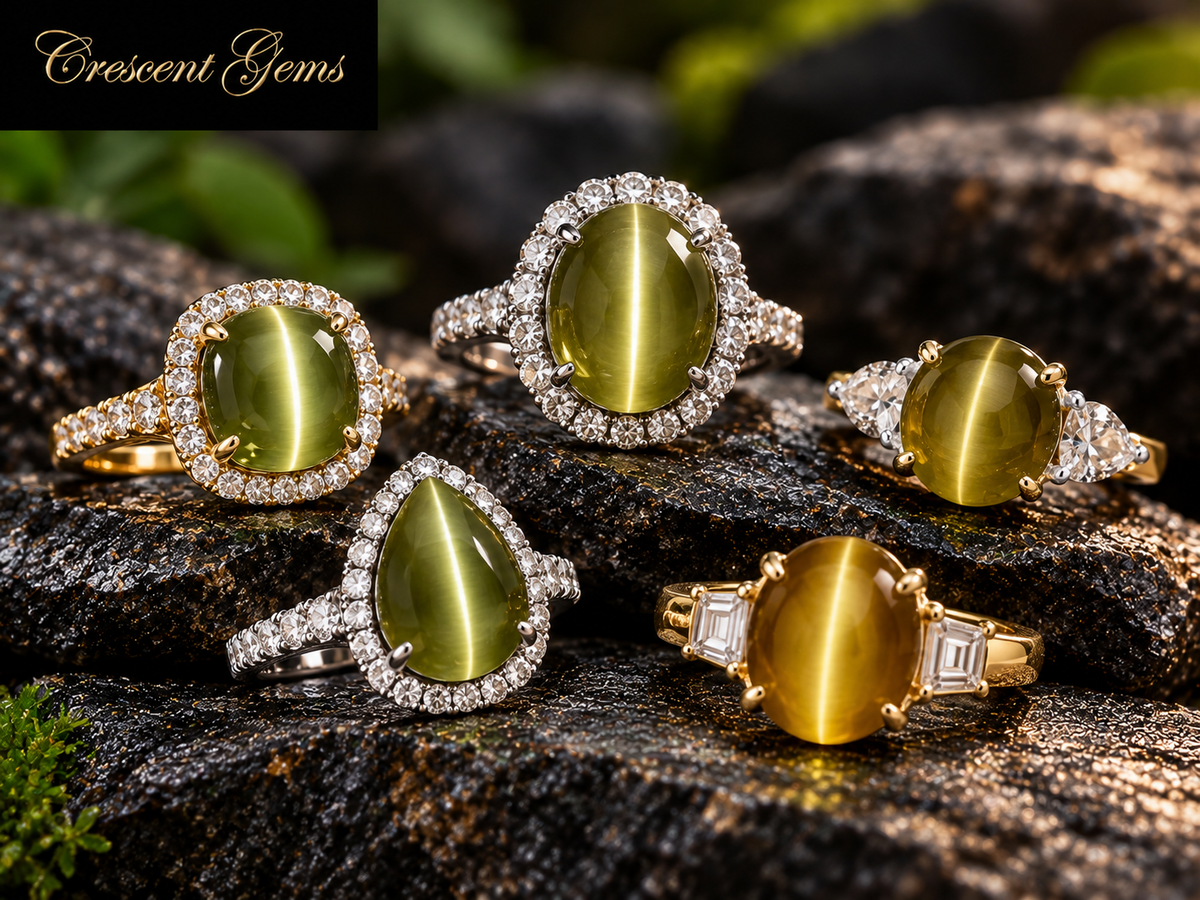
Is Cat's-Eye Chrysoberyl Good for an Engagement Ring?
Read moreabout Is Cat's-Eye Chrysoberyl Good for an Engagement Ring?
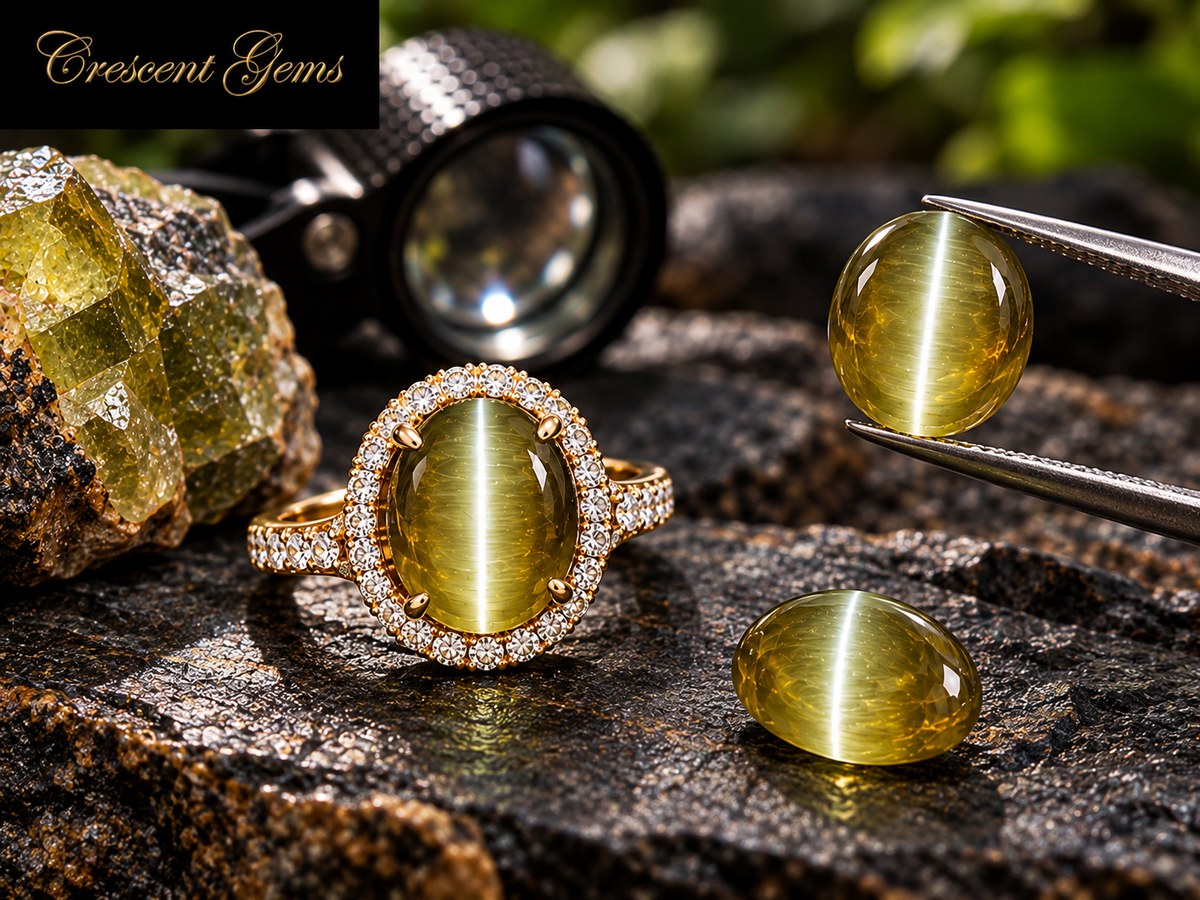
Cat's Eye Chrysoberyl Price Guide — What They Cost and Why
Read moreabout Cat's Eye Chrysoberyl Price Guide — What They Cost and Why